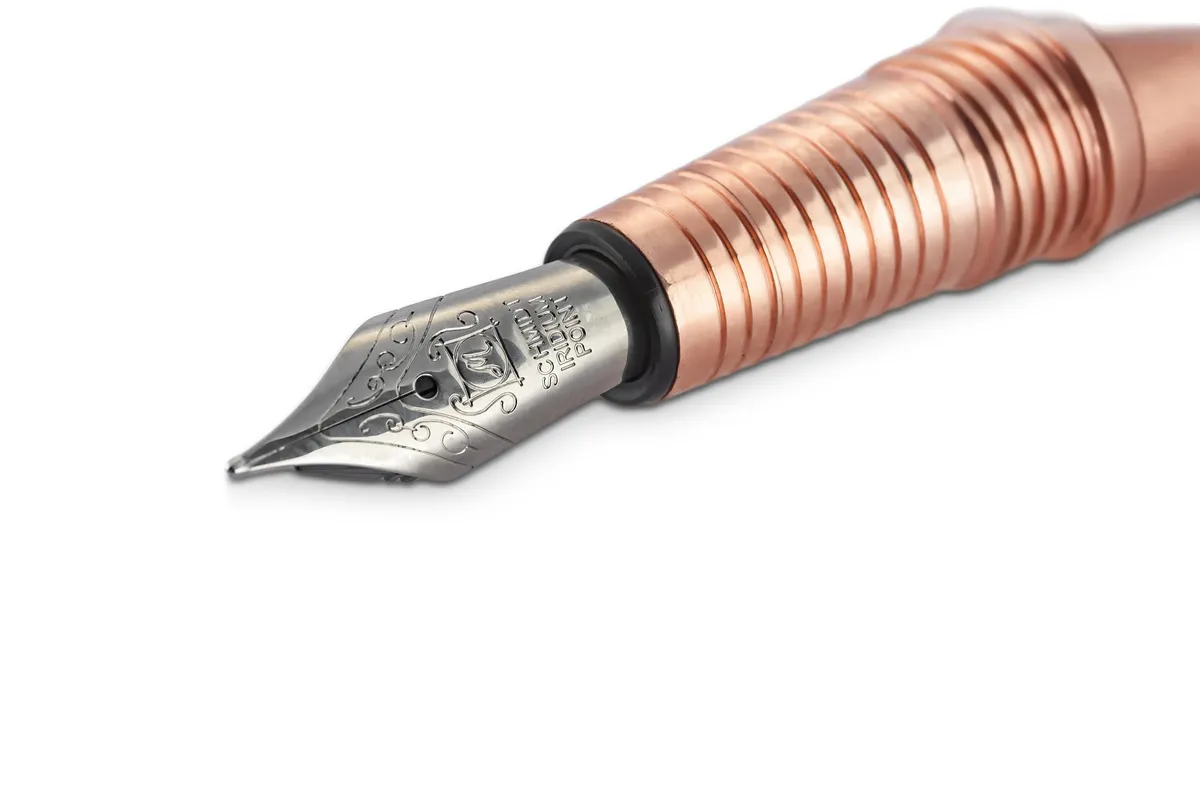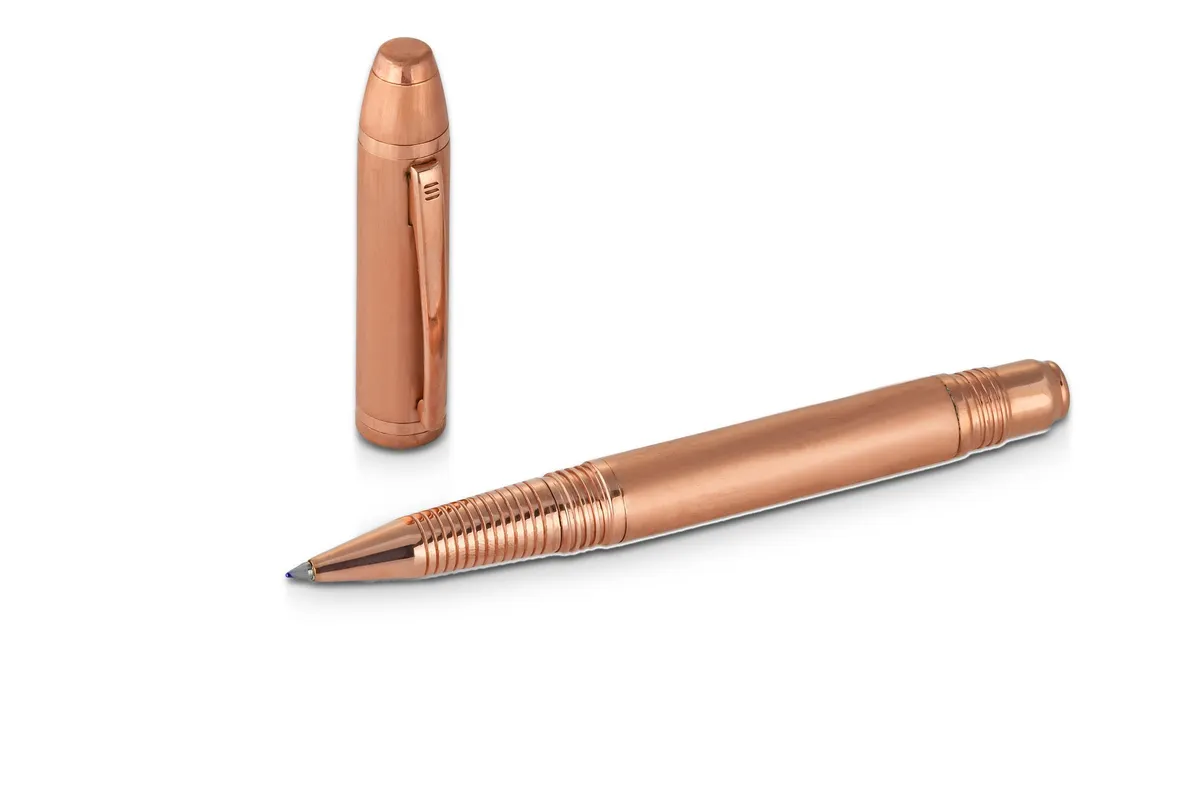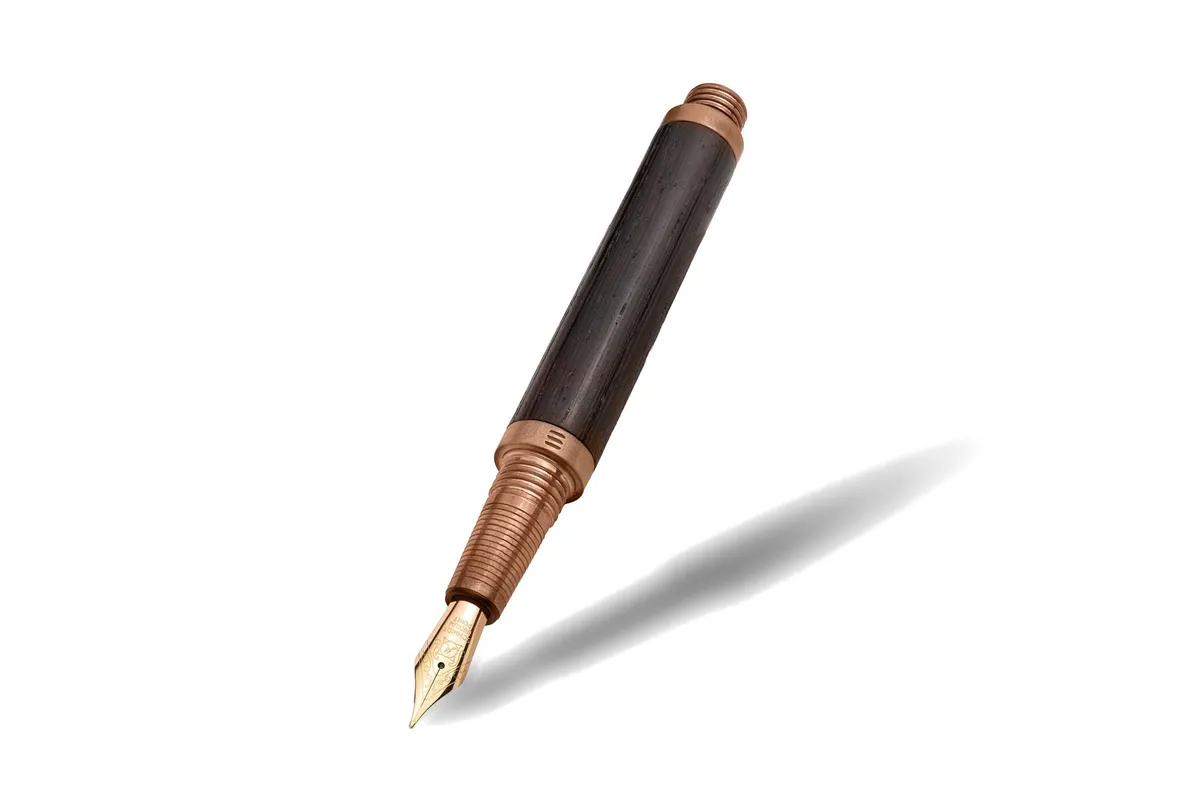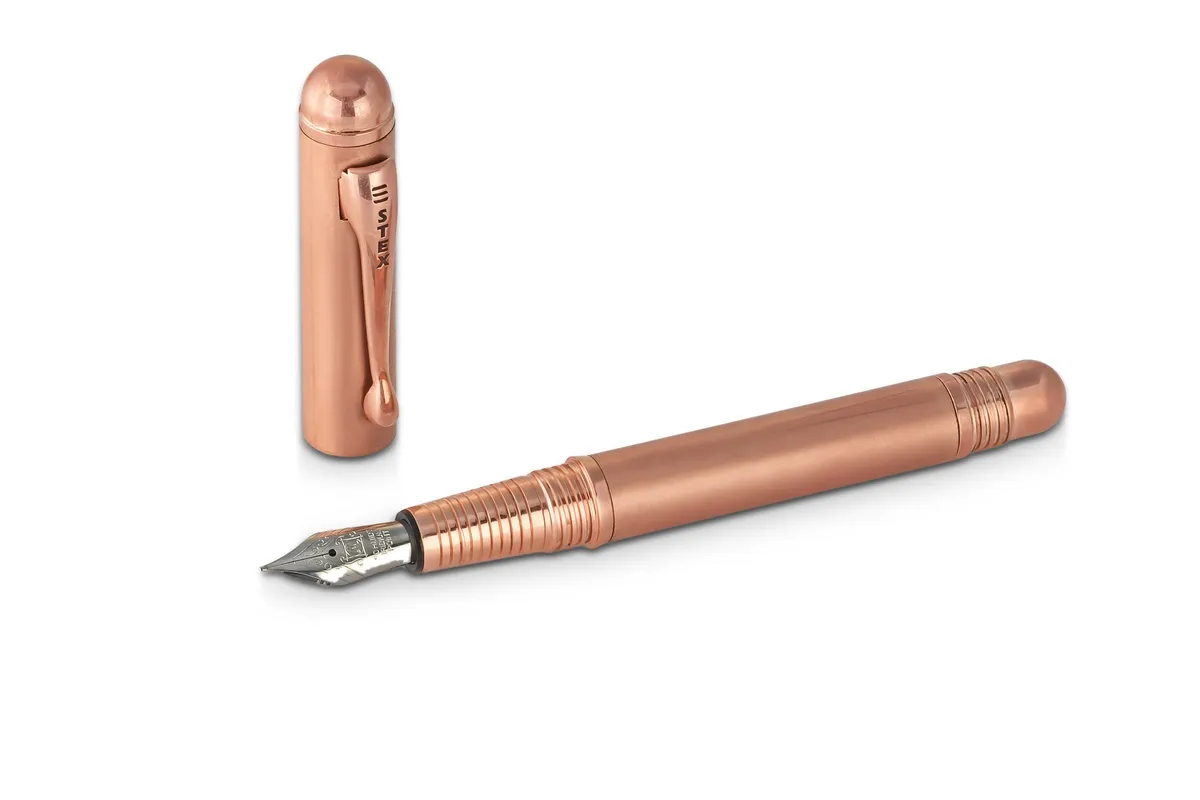
A copper fountain pen is a pen made from a solid bar of copper, machined into a cap, barrel and grip, with a steel nib and an ink converter inside. It writes like any good fountain pen. What makes it different is everything around the nib: the weight, the warmth, and the way the metal changes colour the longer you own it.
This guide covers what to expect, how to choose one, and how to look after it.
What a copper pen feels like
The first thing most people notice is weight. Copper is a dense metal, roughly three times as dense as aluminium and twice as dense as titanium, so a copper pen sits heavier in the hand than the same shape in almost any other material. A full-size copper pen like the 137C Cu weighs 62 g; the same design in titanium, the 137C Ti, weighs 42 g.
That weight does useful work. A heavier pen rests on the paper under its own weight, so you press less and grip more lightly. Many people find their handwriting slows down and steadies with a copper pen. If you prefer a quick, feather-light pen for fast note-taking, look at a slim model or a lighter metal instead; our guide to pen weight and balance explains the trade-off.
The second thing is temperature. Copper conducts heat very well, so it feels cool when you first pick it up and warms to your hand within a minute or two.
How copper ages: the patina
Bare copper reacts slowly with air and with the oils and moisture of your skin. Over weeks and months it moves from bright salmon pink to amber, then to a deep chocolate brown. The parts you touch most darken differently from the parts you don't, so no two copper pens age alike. That changing surface is called patina, and for many owners it is the reason to choose copper at all.
Patina is a thin surface layer, not damage. It doesn't affect how the pen writes, and you can take it back to bright copper at any time. Our article on why copper pens darken goes through the chemistry and a rough timeline.
Is copper safe to write with?
Yes. Holding copper is safe for everyday use; copper has been used for cookware, door handles and jewellery for centuries. In a fountain pen the ink never touches the copper at all: it sits in the converter or cartridge, runs through the feed and reaches the paper through the steel nib. That means any fountain pen ink is safe in a copper pen. See choosing ink for a metal fountain pen for which inks to use and avoid.
Choosing your copper pen
Start with the shape and size, because that affects daily use more than anything else.
| If you want | Look for | STEX example |
|---|---|---|
| A pen for a shirt pocket or small bag | A short pen that grows to full length when posted | 100C Cu: 100 mm capped, about 140 mm posted, 55 g |
| A substantial desk pen for long writing | A full-size pen with real weight | 137C Cu: 137 mm capped, 62 g |
| A grip that holds your fingers in place | A threaded or ridged section | D’Magno: fine square threads on the grip, 50 g |
| A cap you can open with one hand | A magnetic cap | Magneto: the cap clicks shut on a magnet, 51.25 g |
| A slim, lighter pen | A narrow barrel | Magnum R: 26 g |
If you like the warmth of copper but want a second tone, mixed-metal pens pair it with brass, titanium or steel, such as the 137C CuBr or 100C CuTi. Brass ages more slowly than copper, so the two parts drift apart in colour over time, which some people love.
The nib inside
Every STEX fountain pen uses a German Schmidt steel nib. Most models come with a medium nib as standard, with fine and bold also available. Medium suits most handwriting and most paper; choose fine for small writing or thin office paper, and bold if you write large or want more ink on the page. What is a Schmidt nib? explains the widths in more detail.
Caring for a copper fountain pen
Care splits into two jobs: the inside and the outside.
Inside, a copper pen needs exactly what any fountain pen needs: flush the nib and feed with water every few weeks or when you change ink. Our care and cleaning guide walks through it.
Outside, you choose. Leave it alone and let the patina deepen, or bring back the shine with lemon and salt, vinegar and salt, or a copper polish. Keep cleaners away from the nib, rinse, and dry the pen well. Step-by-step instructions are in how to clean a copper pen.
A few habits help either way:
- Wipe the pen with a soft dry cloth after use if your hands are damp.
- Store it capped, away from very humid places, if you want the patina to stay even.
- Don't put a copper pen in a dishwasher or soak the whole pen in water.
Copper, brass or titanium?
If you are still deciding on the metal, the short version is: copper for warmth, weight and a patina that changes with you; brass for a harder, more golden pen that ages more slowly; titanium for the lightest pen that never tarnishes. Our full comparison is copper, brass or titanium.
Buying a copper fountain pen from STEX
STEX pens are machined from solid metal and finished by hand in our workshop, Made in India, by a family that spent more than 22 years in the copper trade before making pens. Copper fountain pens in the range start at ₹13,000 (US$240) for the 100C Cu. Every order ships free with tracking, anywhere in the world; visitors in India pay in rupees and everyone else in US dollars.
Browse every model in the fountain pen collection.
Questions people ask
Does a copper fountain pen turn green?
Not with normal use. Copper in daily hand contact darkens to brown. Green spots (verdigris) form only with prolonged moisture, such as a pen left damp or stored somewhere very humid. Wipe them off with a damp cloth and a little lemon juice, then dry the pen.
Is a copper fountain pen heavy?
It is heavier than most pens. A full-size STEX copper fountain pen weighs between about 50 g and 62 g, compared with roughly 20 g to 30 g for many plastic pens. Short and slim copper models are lighter, from about 26 g.
Can I use any ink in a copper pen?
Yes, any dye-based fountain pen ink. The ink stays inside the converter or cartridge, feed and steel nib and never touches the copper body. Avoid India ink, drawing ink and acrylic inks in any fountain pen, because they clog the feed.
How do I keep a copper pen shiny?
Polish it with lemon and salt or a copper polish, keeping cleaner away from the nib, then rinse and dry it. Wiping the pen after use slows darkening. If you enjoy the changing colour, simply let the patina develop.