A common question from people buying their first metal pen is whether ink will react with the copper. The short answer is that it never touches it. Here is why, and how to choose an ink you'll love.
Does ink touch a copper pen?
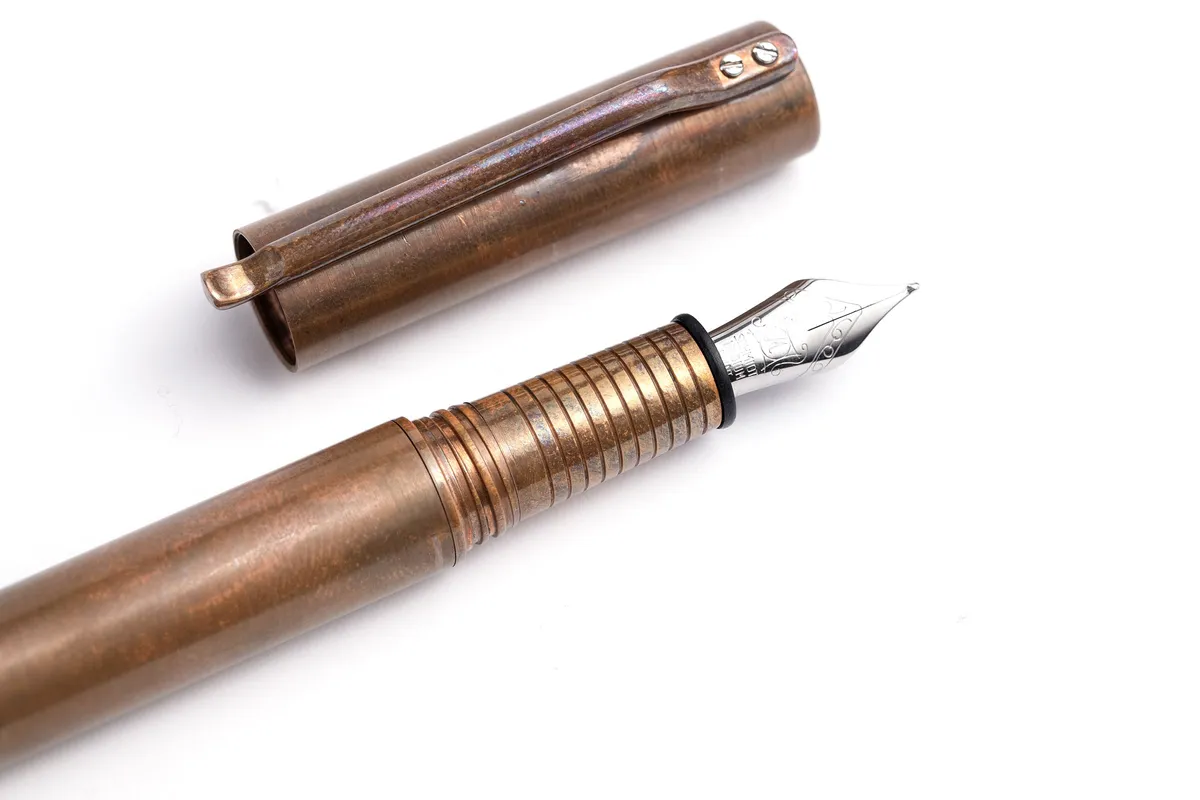
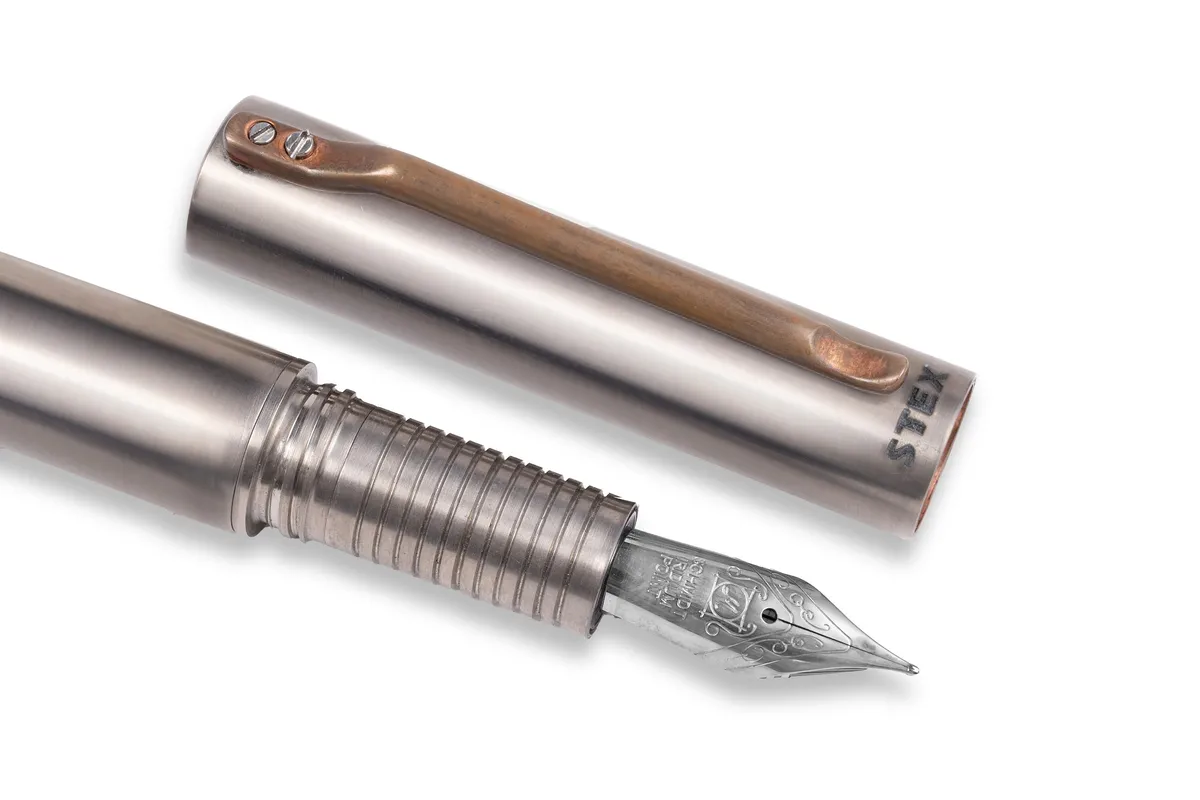
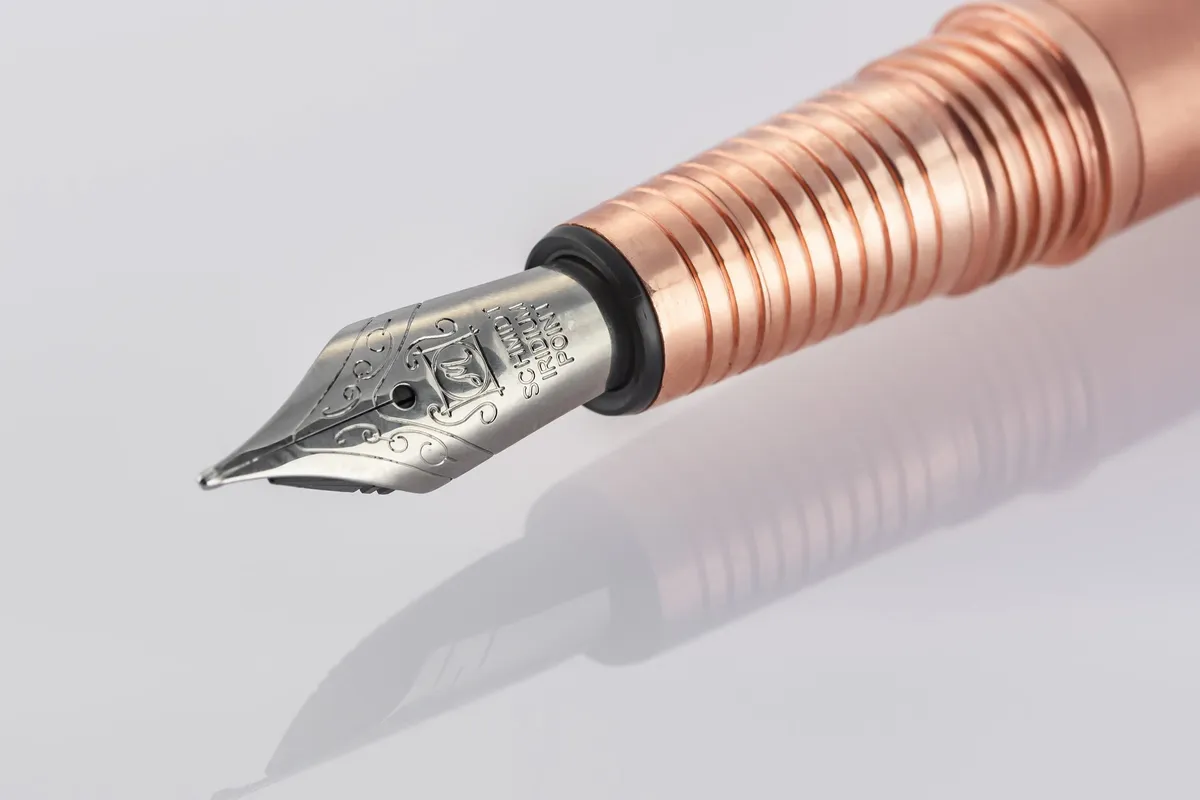
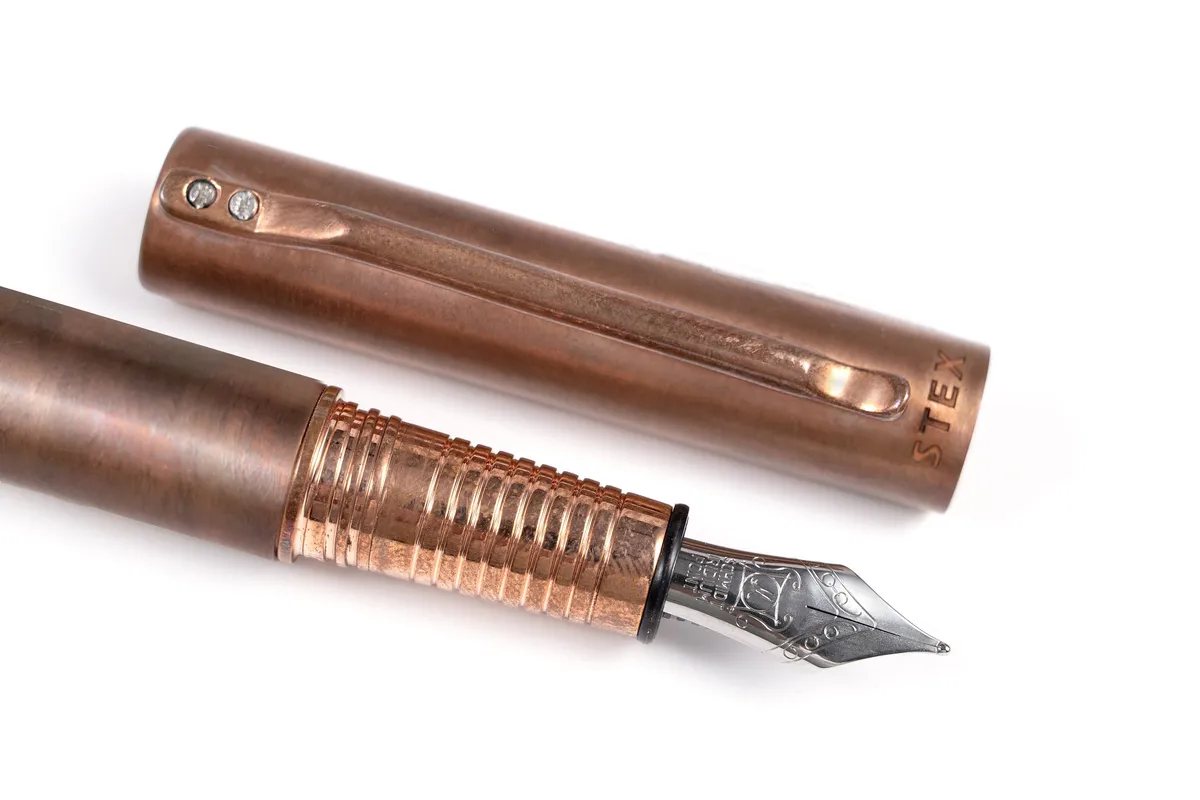
No. In a STEX fountain pen the ink is held in a converter or a cartridge, travels through the plastic feed and reaches the paper through the steel nib. The copper, brass or titanium body is the outside of the pen: it holds and protects those parts but is never in contact with ink. So you can choose any fountain pen ink without worrying about the metal.
The only time ink meets the body is if you spill some while filling. Wipe it off with a damp cloth and dry the pen; on copper, a drop left to dry can leave a mark that a little lemon and salt removes.
Safe inks
Dye-based fountain pen inks are the everyday standard: water-based, vibrant, easy to clean, and made by many brands around the world. They come in every colour you can imagine. If a bottle says it is for fountain pens, it is safe in a STEX pen.
Inks to use with a little extra care
- Shimmer inks contain fine particles that sparkle on the page. They can settle in the feed, so shake the bottle before filling and flush the pen every week or two.
- Pigment inks are waterproof and lightfast, good for signing documents. Flush the pen more often and don't leave it unused with pigment ink inside for weeks.
- Iron-gall inks darken as they dry and are very permanent. They are slightly acidic; with a steel nib they are fine for regular use, but clean the pen thoroughly before storing it.
Inks to avoid
- India ink, drawing ink and calligraphy ink contain shellac or binders that dry inside the feed and can block a pen for good.
- Acrylic or craft inks, for the same reason.
- Homemade inks of unknown composition.
Choosing a colour
- Blue is classic, easy to read and forgiving of small mistakes.
- Blue-black looks professional and suits forms and signatures.
- Black gives maximum contrast for scanning and photocopying.
- Brown, sepia and copper tones look wonderful with a copper pen: the pen and the page age together.
- Greens, teals and purples are for journals, letters and the joy of it.
Flow and drying time
Inks differ in how freely they flow. A "wet" ink with a broad nib gives saturated colour but takes longer to dry, which matters if you're left-handed or write fast in notebooks. A "drier" ink with a fine nib dries quickly and keeps lines crisp on cheap paper. If smudging bothers you, try a fine nib and a fast-drying ink.
Switching inks
Before you change colour, flush the pen with water until it runs clear, as described in our fountain pen care guide. Mixing inks from different brands inside a pen can cause them to react and thicken.
Questions people ask
Can fountain pen ink damage a copper pen?
No. The ink is held inside the converter or cartridge and the feed, and never touches the copper body. Wipe off any spills while filling.
Can I use India ink in a fountain pen?
No. India ink and drawing inks contain binders that dry inside the feed and can permanently clog a fountain pen. Use only ink made for fountain pens.
What ink colour suits a copper pen?
Browns, sepias and warm copper tones complement a copper pen beautifully, though any fountain pen ink will work.