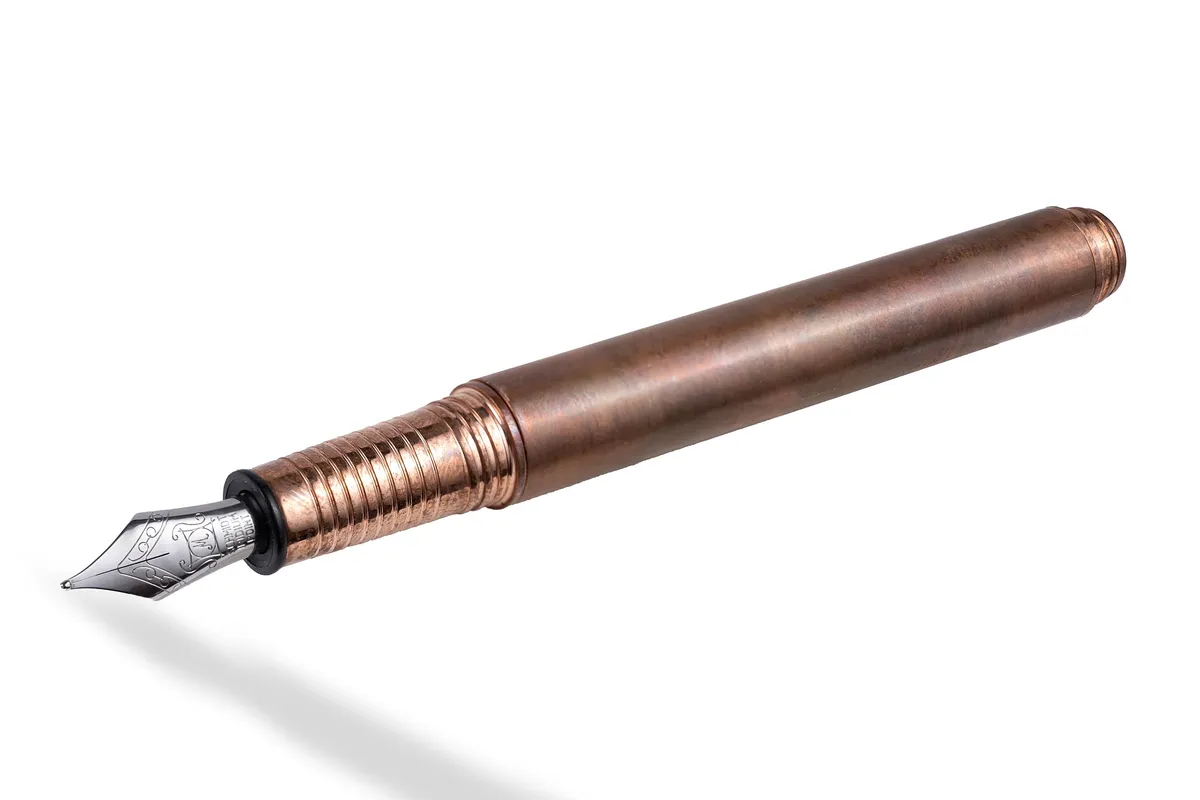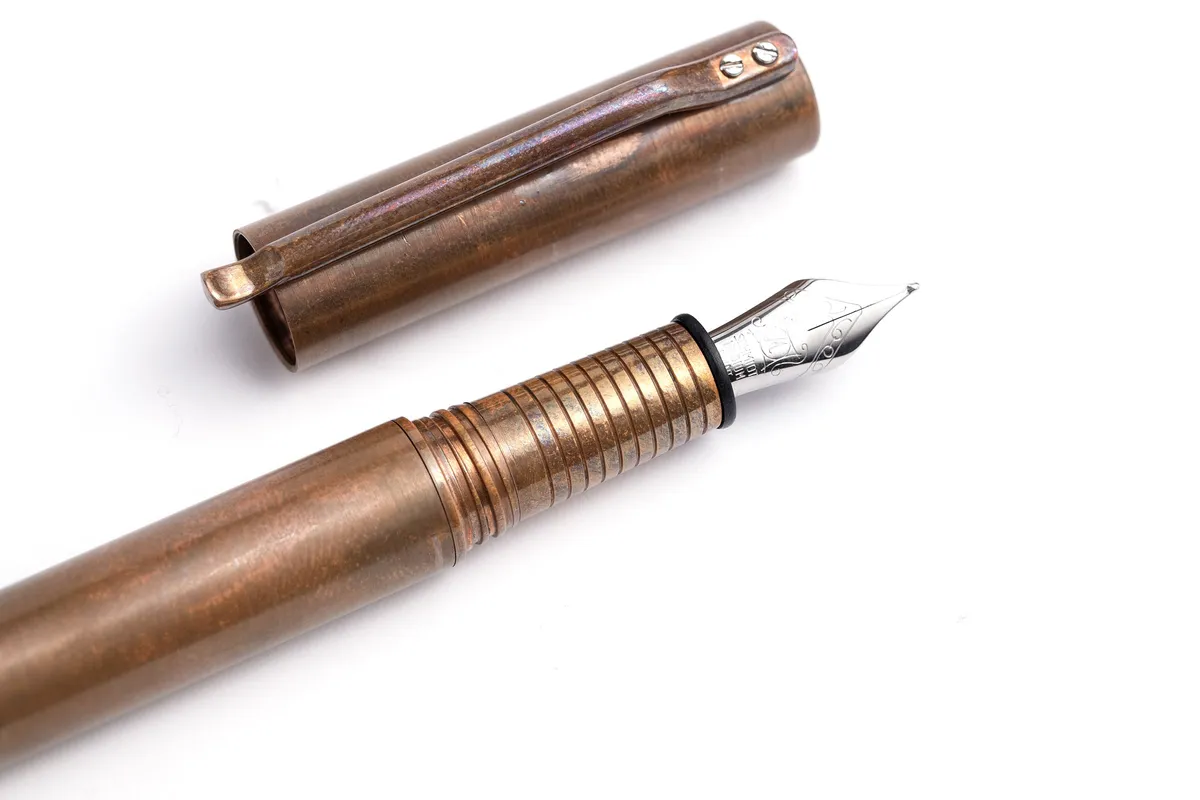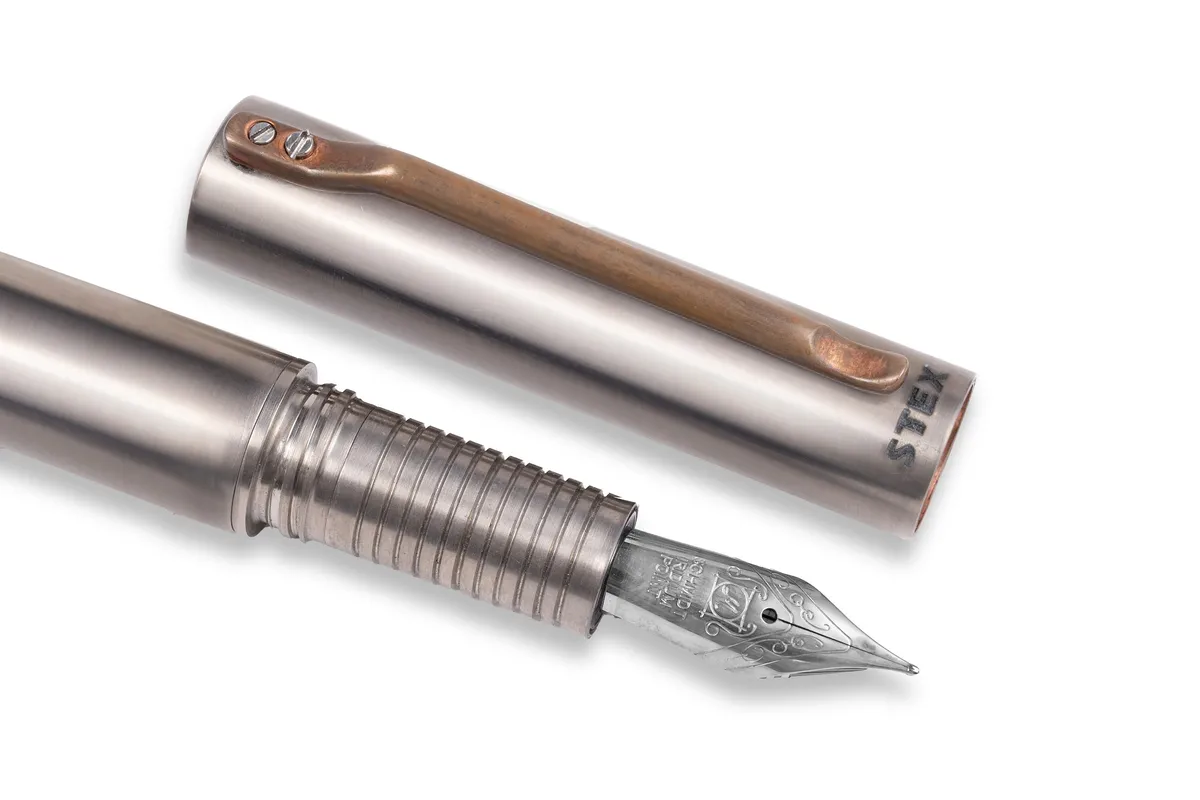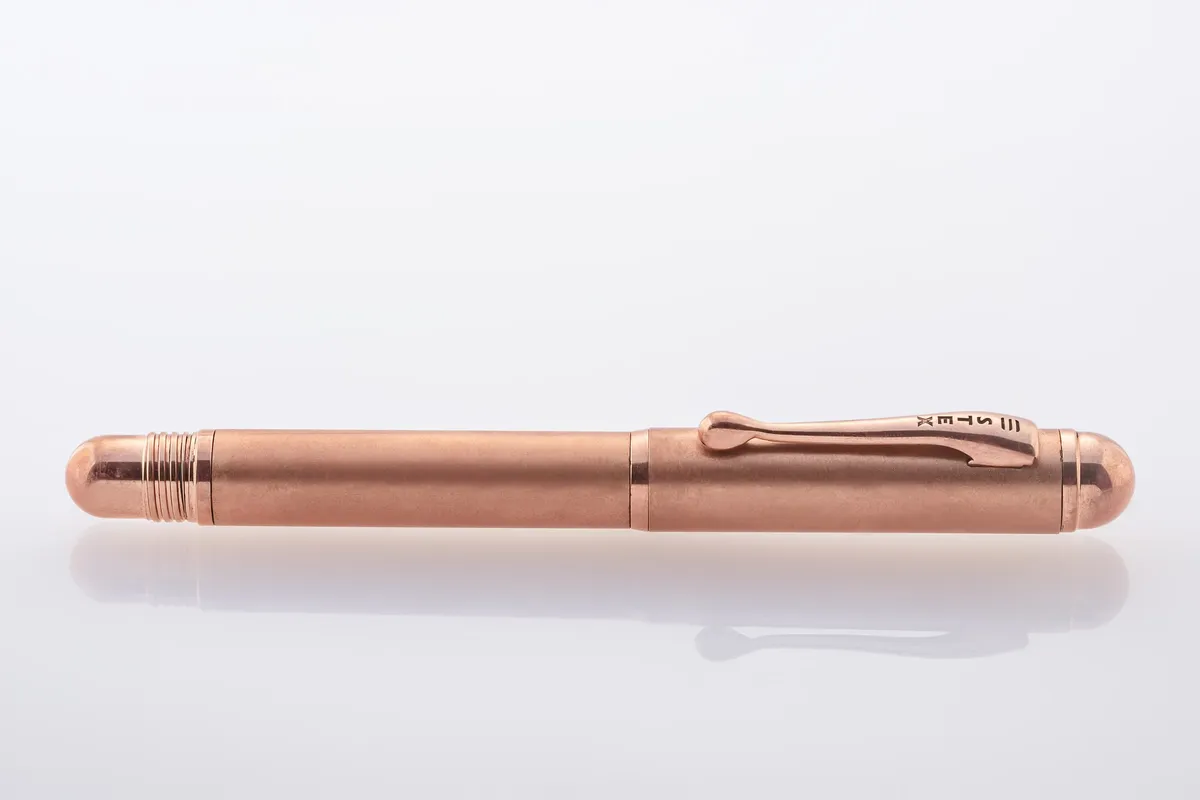
Copper is the most alive metal a pen can be made from. Within days of leaving our workshop it starts to change colour, and within months it settles into a deep brown that records exactly how you hold it. Some owners love that. Others want the first-day shine back now and then. Both are right, and both are easy.
Do you need to clean a copper pen at all?
No. A copper pen does not need cleaning to work or to last. The darkening you see is a thin layer of copper oxide that forms where the metal meets air and the oils in your skin. It is stable, it slows further change and it does not affect how the pen writes. A soft, dry cloth after a long writing session is all the day-to-day care copper needs.
Clean it when you want the colour back, or when a spot of moisture or a salty fingerprint has left a mark you don't like. If you want to understand what the colour change actually is, read why copper darkens.
Before you start: protect the nib
Fountain pens have parts that should never meet acid or polish: the nib, the feed beneath it and the threads that hold the converter. So the first step is always the same.
- Empty the pen, or at least cap the converter end so ink can't run.
- Unscrew the barrel from the section (the grip with the nib).
- Set the section aside, nib up, on a paper towel.
You will clean only the cap and the barrel. If your pen has a copper grip section, clean it by hand with a cloth dampened with the cleaner, keeping well away from the nib.
Method 1: lemon and salt
This is the classic, and it works because citric acid dissolves copper oxide.
- Mix a teaspoon of fine salt with enough lemon juice to make a loose paste.
- Rub it over the copper with your fingers or a soft cloth, following the length of the pen.
- Within a minute the metal turns from brown to bright rose.
- Rinse under running water until no salt remains, then dry immediately and thoroughly with a soft towel, including inside the cap.
Drying matters. Copper left damp with salt on it can develop green spots, which are copper salts rather than the even brown patina most people like.
Method 2: vinegar and salt
White vinegar works the same way as lemon, with acetic acid in place of citric acid. Mix a little salt into a spoonful of vinegar, rub, rinse and dry. It is slightly faster than lemon, so check the colour as you go.
Method 3: a copper polish
A commercial copper cream or wadding polish gives the brightest, most even finish and leaves a light protective film. Use a small amount on a soft cloth, buff along the length of the pen, then wipe away every trace of residue, especially inside engraved lines and around the clip. Avoid polishes that are labelled abrasive or "for heavy tarnish" on a pen you hold every day; they can leave a scratchy finish.
What not to use
- Steel wool or scouring pads. They clean fast but leave scratches that collect dirt and darken unevenly.
- Bleach or chlorine cleaners. Chlorides react with copper and leave green marks.
- Dishwashers and ultrasonic cleaners with the nib attached. Heat and vibration can loosen the nib and feed.
- Lacquer sprays. A clear coat looks fine at first but wears through where your fingers rest, leaving a patchy pen.
Keeping the shine longer
Clean copper will start to darken again within days; that is simply what copper does. To slow it:
- Wipe the pen with a dry cloth after writing, so skin oils don't sit on the metal.
- Store it capped in a pen sleeve or case rather than loose in a pocket with coins and keys.
- Apply a very thin coat of microcrystalline wax (the kind sold for museum metalwork) after cleaning and buff it off. It adds a barely-there barrier that slows oxidation for weeks.
Or let it grow
Plenty of copper-pen owners end up putting the polish away for good. After a year with a pen like the STEX 137C in copper, the patina becomes a record of every page written: darker at the grip and the cap lip, lighter along the barrel. You can see how one pen ages from day one to a year on our home page, where the patina slider shows the change.
If you ever want day one back, lemon and salt will be waiting.
Questions people ask
Can I clean a copper pen with toothpaste?
Toothpaste is mildly abrasive and will brighten copper, but it can leave fine scratches and is hard to rinse out of engraving and threads. Lemon and salt or a non-abrasive copper polish give a cleaner result.
Why did my copper pen turn green?
Green spots are copper salts, usually from moisture, sweat or salt left on the metal. Clean the spot with lemon and salt, rinse, and dry the pen thoroughly. Wiping the pen after use prevents it from coming back.
Will cleaning damage a STEX pen?
Not if you keep acid and polish away from the nib, feed and converter. The copper body itself can be cleaned as often as you like.