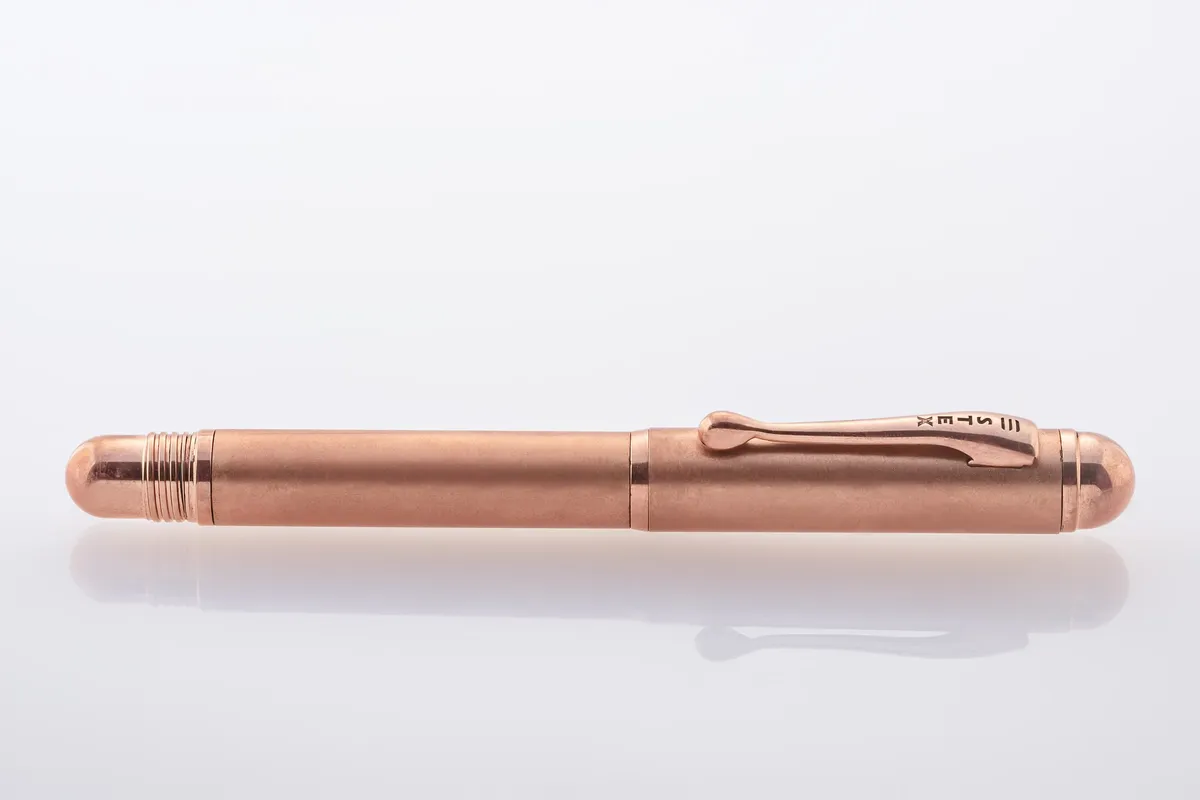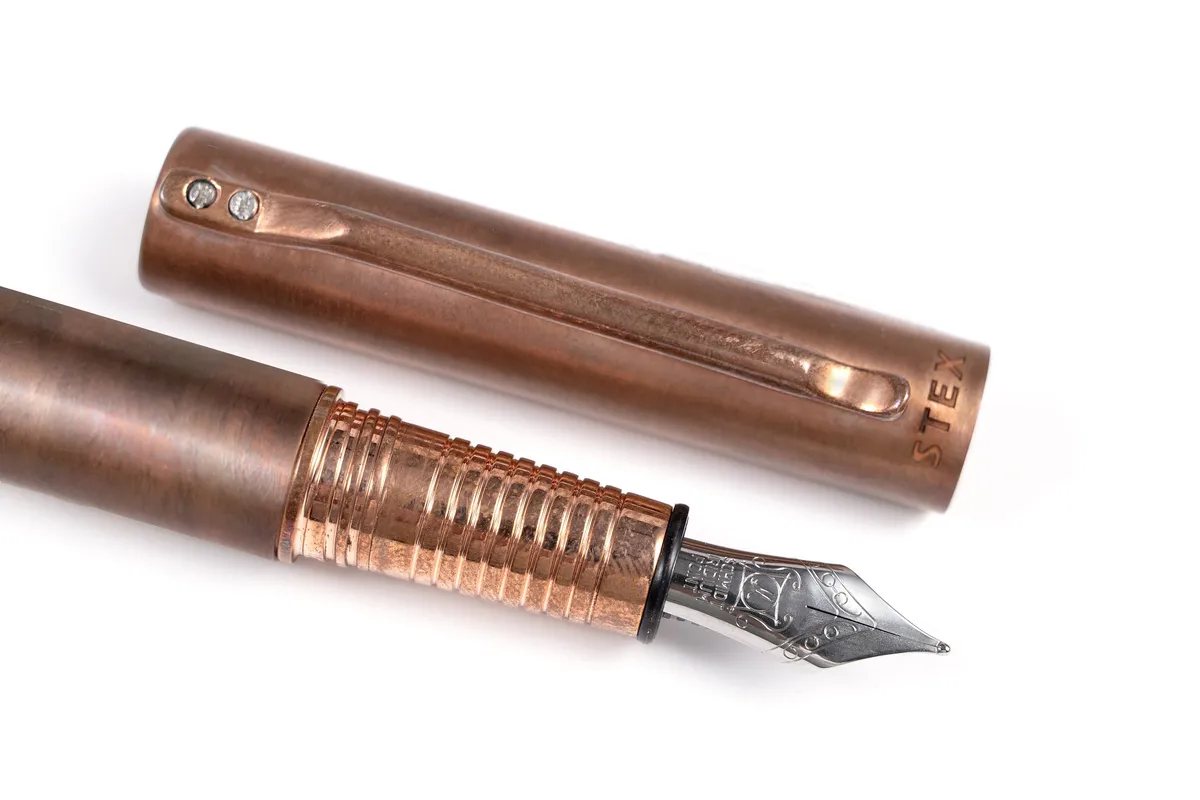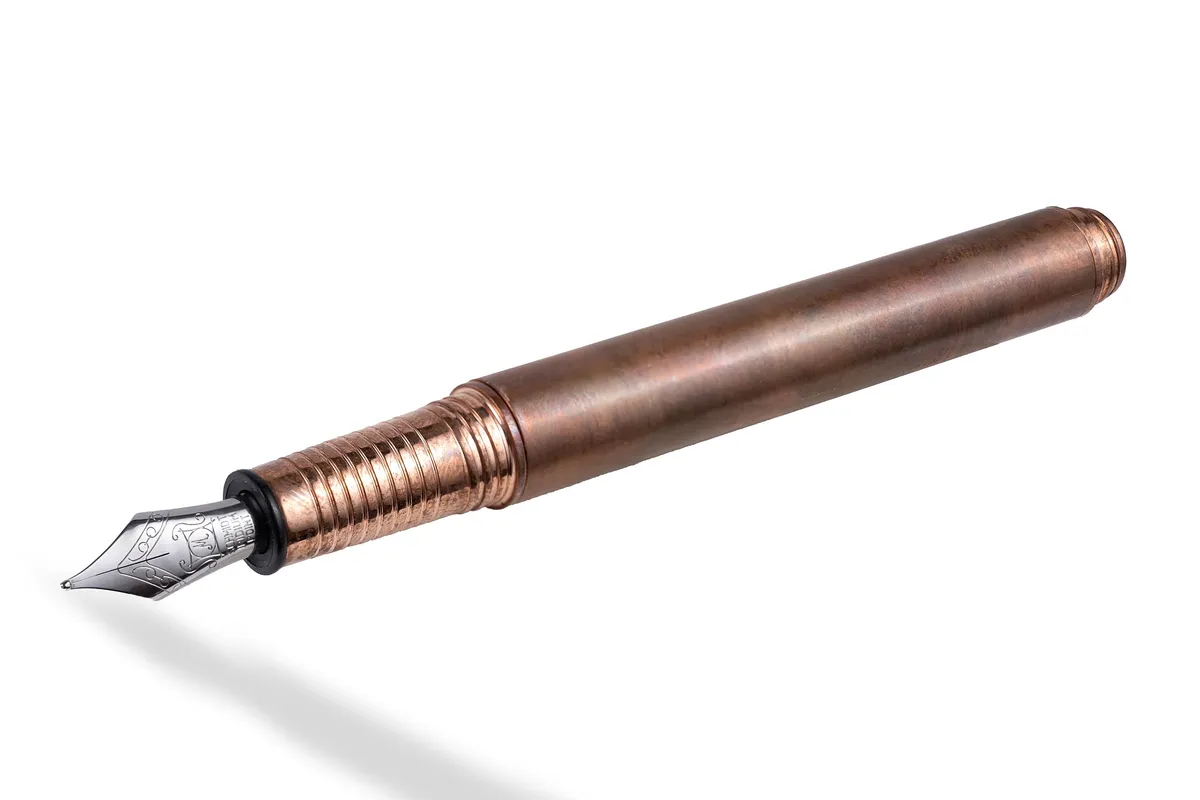
Hold a new copper pen and it is the colour of a freshly cut coin: bright, rosy and so reflective that every fingerprint shows. Carry it for a month and it has softened to a warm satin. After a year it is a mellow brown with a faint green cast, patterned exactly where your fingers rest. That change is called patina, and it is the main reason people choose copper over every other pen material.
What patina actually is
Copper is a reactive metal. The moment a freshly machined surface meets air, it begins to combine with oxygen to form copper oxides:
- Cuprous oxide forms first. It is reddish-brown and gives copper its early warm, rosy-brown cast.
- Cupric oxide builds up over time. It is dark in bulk, but in the very thin film on a pen it reads as a deeper, warmer brown rather than black.
- Copper sulphides form where there are traces of sulphur in the air, from cooking, traffic or even some paper and rubber. They add darker, sometimes iridescent tones.
These layers are only a few millionths of a millimetre thick. They don't flake, they don't wear through the metal and they don't affect how the pen writes. In fact they slow further change, which is why an old copper pen stays roughly the same colour once it has settled.
Why your hand matters
Skin is slightly acidic and carries natural oils and salts. Wherever you hold a pen, those speed up the reaction, so the grip, the cap lip and the end you rest against your palm darken first. Two people using identical pens for a month end up with visibly different pens. That is the "diary" we mean when we say copper keeps a diary: the pattern is yours alone.
Things that make copper darken faster:
- Warm, humid weather
- Frequent handling, especially with warm hands
- Contact with sulphur-containing materials such as rubber bands or some leathers
Things that slow it down:
- Dry, cool air
- Wiping the pen after use
- A thin coat of microcrystalline wax after cleaning
Where the green comes from
The green on old copper roofs and statues is verdigris: basic copper carbonates and chlorides, built up over years of rain and air. A pen never gets that far, but it does see a little of the same chemistry. Sweat carries salt, and in humid weather (an Indian monsoon is the perfect example) moisture lingers in the grip's grooves, the threads and the edge of the cap. There, a thin teal-green film forms, and over a year it gives the whole pen a faint green cast against the brown.
That touch of green is normal and, for many owners, the best part of an old copper pen. If you would rather not have it, wipe the pen dry after use, or clean the spots with lemon and salt, rinse and dry well. Our guide to cleaning a copper pen walks through it step by step.
A rough timeline
Every pen is different, but a copper STEX pen used most days typically goes through these stages:
| Time | What you'll see |
|---|---|
| Day 1 | Bright, rosy copper with a mirror sheen |
| 1 month | The pink deepens to a soft rose; the grip and cap lip change first |
| 6 months | A warm chocolate brown, uneven in the way you hold it, with a satin sheen |
| 1 year | A mellow brown with a faint green cast and a touch of verdigris in the grooves |
The patina slider on our home page shows the same journey on a real pen photograph.
Is copper patina safe?
Holding a copper pen is much like handling copper coins or a copper water bottle: the oxide layer is stable and stays on the metal. On very humid days some people notice a faint dark mark on their fingertips after writing for a long time with raw copper; it washes off with soap and water. If you have a known copper sensitivity, a titanium pen is the better choice.
Speeding it up
Some owners want an aged look straight away. Leaving the pen in a warm room, handling it often and keeping it in a leather pouch all help. Chemical patina solutions exist, but they work unevenly on small curved objects and we don't recommend them on a pen you'll hold every day; time and your hands do it better.
Choosing a metal for the patina you want
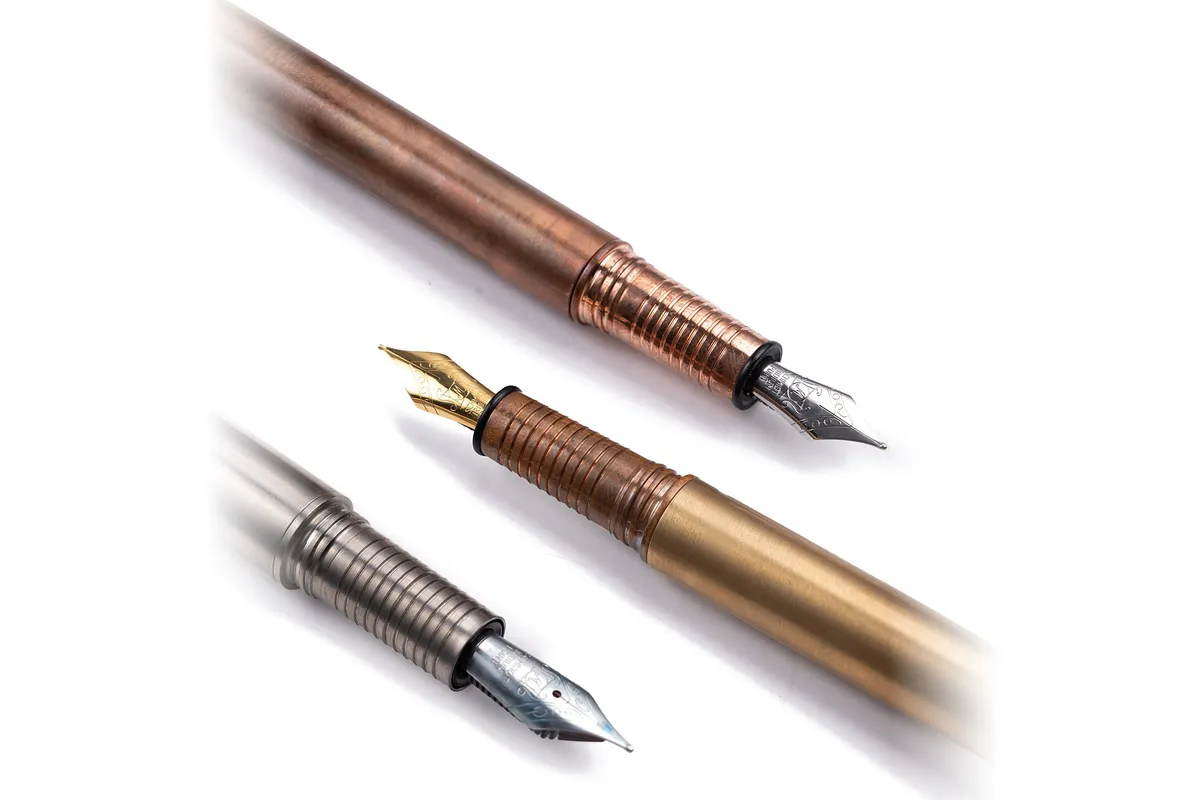
If you love the idea of a pen that changes, choose pure copper; it has the richest colour shift. If you want warmth with a slower change, brass turns a mellow gold-brown. If you want a pen that never changes at all, titanium keeps its cool grey for good. We compare them in detail in copper, brass or titanium, and you can see them side by side in the STEX fountain pen collection.
Questions people ask
How long does it take a copper pen to darken?
Most copper pens visibly soften within a week or two, turn a warm brown within a few months of daily use, and pick up a faint green cast in humid weather over the first year. Humidity and frequent handling speed it up; it never turns black.
Does patina make copper weaker?
No. Patina is a microscopic surface layer that actually protects the metal underneath. It does not reduce the strength or life of the pen.
Can I remove the patina?
Yes, at any time. A paste of lemon juice and salt, or a copper polish, brings back the original shine in a minute. Keep it away from the nib and dry the pen thoroughly.