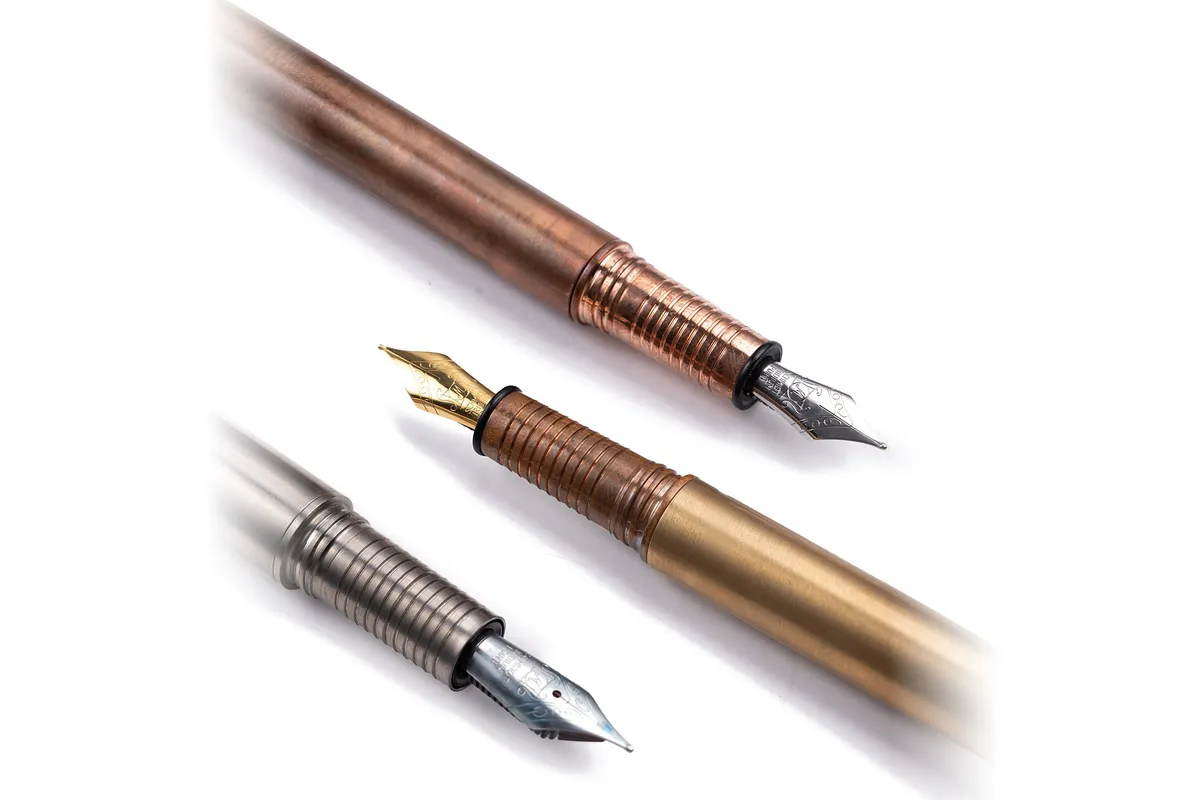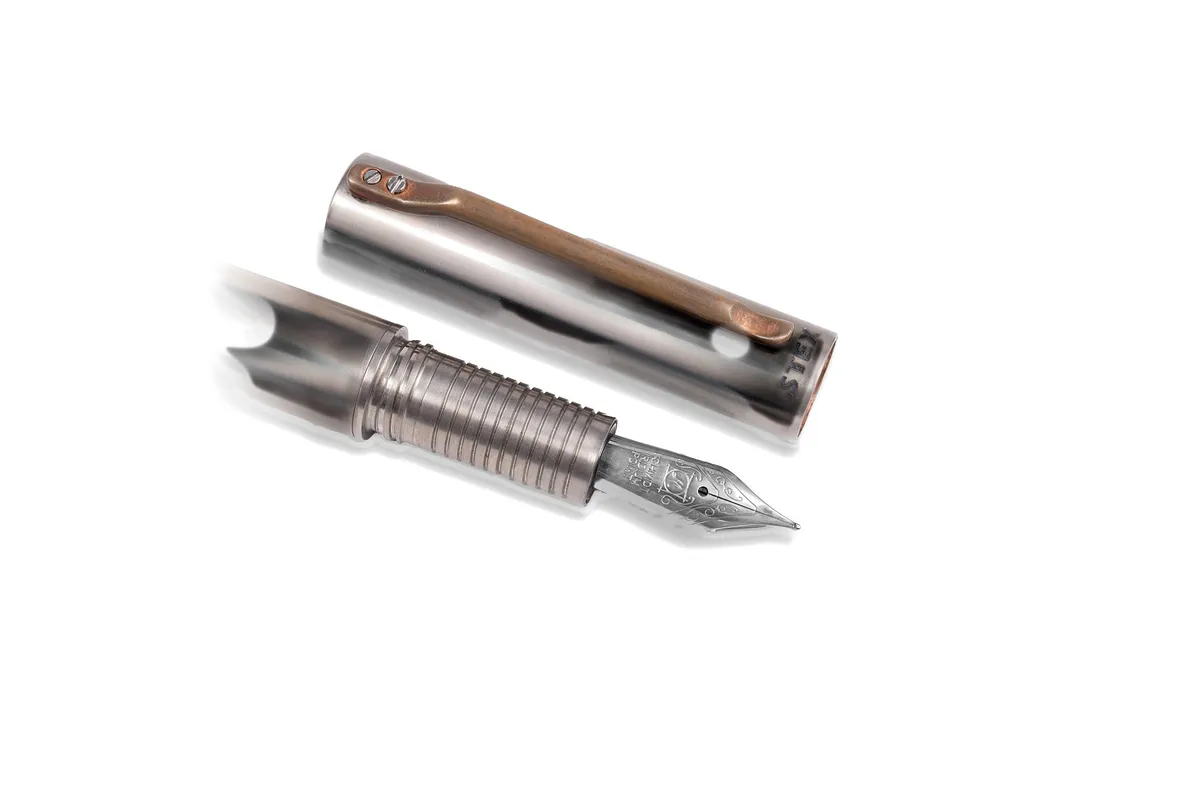
A titanium fountain pen is a pen whose body is machined from titanium, the same family of metal used in aircraft parts, watch cases and surgical implants. It is light, strong and doesn't tarnish, which makes it one of the easiest metal pens to live with.
Here is what that means when you actually write with one.
Why titanium?
Three properties make titanium a natural pen metal.
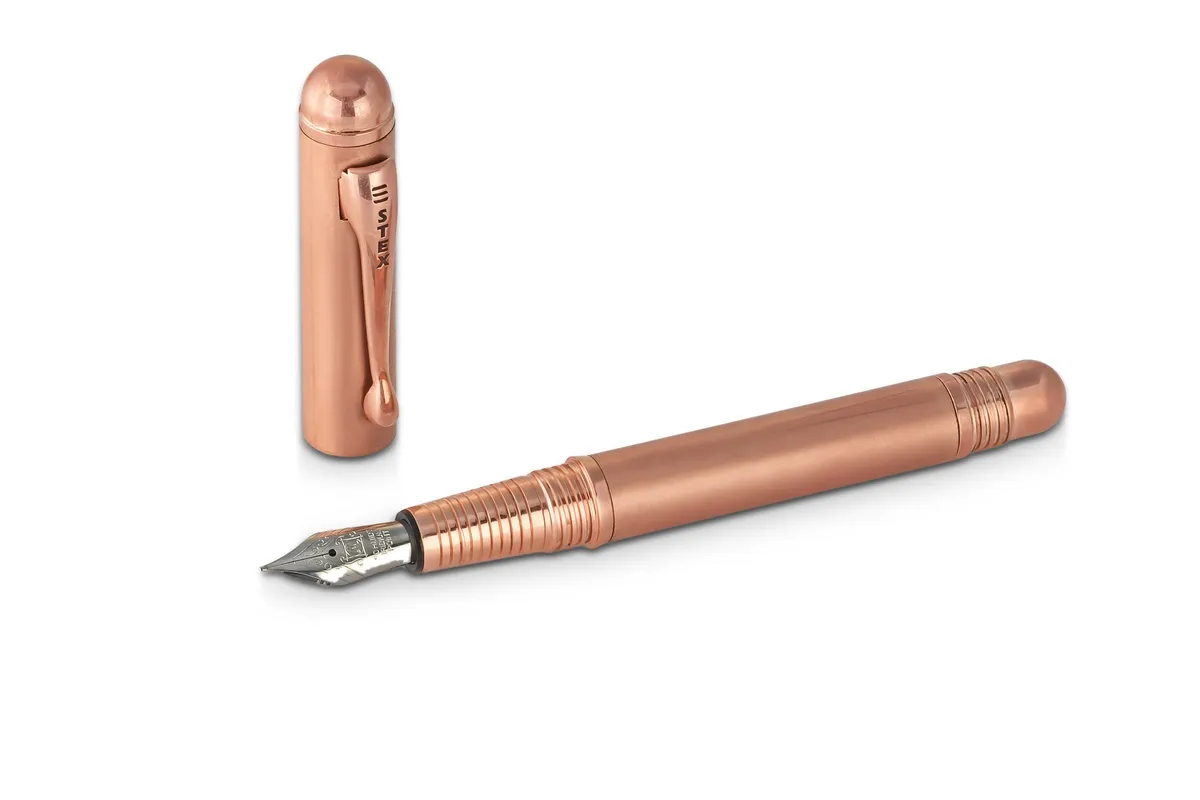
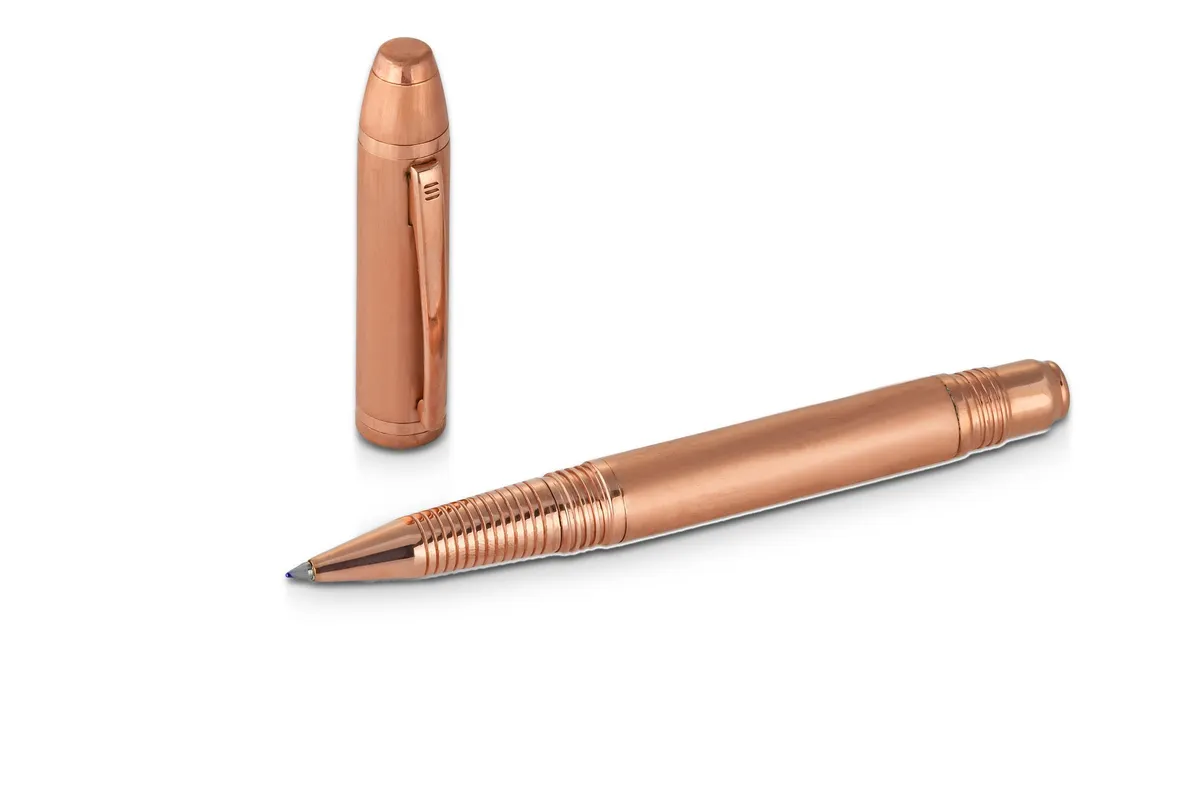
Light for a metal. Titanium is roughly half as dense as copper or brass. The same pen design weighs much less: the 137C in copper weighs 62 g, while the 137C Ti weighs 42 g.
Strong. Titanium resists dents and bending far better than softer metals of the same thickness, so a titanium pen shrugs off a life in pockets and bags.
Stable. Titanium forms a thin, invisible oxide layer that protects it. It doesn't darken, develop patina or turn green, and it resists sweat and humidity. What you buy is what you'll have in ten years.
How a titanium pen feels in the hand
A titanium pen feels substantial without being heavy. It still has the cool, solid feel of metal, but the lighter weight means you can write for long stretches without fatigue. Many people who find copper pens too heavy for long sessions settle happily on titanium.
The finish on titanium tends to be a soft, grey satin rather than a bright mirror. It hides fine scratches well and doesn't show fingerprints the way polished metal does.
Titanium compared with copper and brass
| Titanium | Copper | Brass | |
|---|---|---|---|
| Weight | Lightest | Heaviest | Heavy |
| Colour over time | Stays the same | Darkens to brown | Darkens slowly to deep gold |
| Care needed | Almost none | Optional polishing | Optional polishing |
| Feel | Cool, light, satin | Warm-toned, weighty | Warm, golden, weighty |
| Best for | Travel, long writing, low care | Character, weight, patina | Classic look, slower ageing |
For a longer comparison, see copper, brass or titanium.
Full-size or pocket?
STEX makes titanium fountain pens in two lengths.
Full-size: the 137C Ti. 137 mm capped and 180 mm with the cap posted, which rests well in a larger hand. It weighs 42 g (22 g without the cap), so it is light enough to write unposted for hours. ₹20,000 / US$370.
Pocket: the 100C Titanium. About 100 mm capped, short enough for a shirt pocket, and about 140 mm posted, a full writing length. It weighs 34 g. ₹16,000 / US$270. There is also the 100C Morse Ti at ₹20,000 / US$345.
If you like the idea of titanium but want some copper warmth, the 100C CuTi pairs a titanium cap and barrel with a copper section, clip and button, and weighs 32 g.
Not sure which length? Our article on pocket fountain pens explains how a short pen that posts to full length works.
The writing side
The body material doesn't change the line on the page; the nib does. Every STEX titanium fountain pen uses a German Schmidt steel nib, medium as standard with fine and bold available. Medium suits most handwriting; fine suits small writing and thin paper. See what is a Schmidt nib? for help choosing.
Who titanium suits best
- Travellers and commuters, who want a pen that survives a bag and weighs little.
- People who write for hours, such as students, writers and anyone filling journals, who want metal without the weight.
- Anyone who wants low maintenance. Titanium needs nothing but the occasional internal flush every fountain pen needs (how to clean a fountain pen).
- Gift buyers who don't know the recipient's taste. A titanium pen's neutral grey suits almost anyone.
If you are drawn to a pen that changes with you, read about copper fountain pens instead.
Caring for titanium
There's very little to do. Wipe the outside with a soft cloth. Flush the nib and feed with water when you change ink or every few weeks. Avoid abrasive cleaners, which can change the satin finish. There's no patina to manage and nothing to polish.
Browse the full range in the fountain pen collection. Every STEX order ships free with tracking, worldwide.
Questions people ask
Is a titanium pen better than a stainless steel pen?
Titanium is lighter than stainless steel for the same size and is very resistant to corrosion, so a titanium pen weighs less and needs almost no care. Stainless steel is heavier and harder. Which is better depends on whether you prefer a lighter or heavier pen.
Does titanium scratch?
Titanium is strong and resists dents, but like any metal its surface can pick up fine marks over years of use. A satin titanium finish hides them well, and they don't affect how the pen writes.
How much does a titanium fountain pen weigh?
A full-size STEX titanium fountain pen, the 137C Ti, weighs 42 g. The pocket 100C Titanium weighs 34 g, and the copper-and-titanium 100C CuTi weighs 32 g.
Will a titanium pen change colour?
No. Titanium is protected by a thin, stable oxide layer, so it doesn't darken or develop a patina the way copper and brass do. It looks the same for years.