A copper pen costs more than an everyday pen, weighs more, and changes colour as you use it. Whether that is worth it depends on how you write and what you want from the object in your hand. Here is an honest breakdown of what you get and what you give up.
What you're paying for
With a machined copper pen you are paying for three things: the metal, the machining and the finishing.
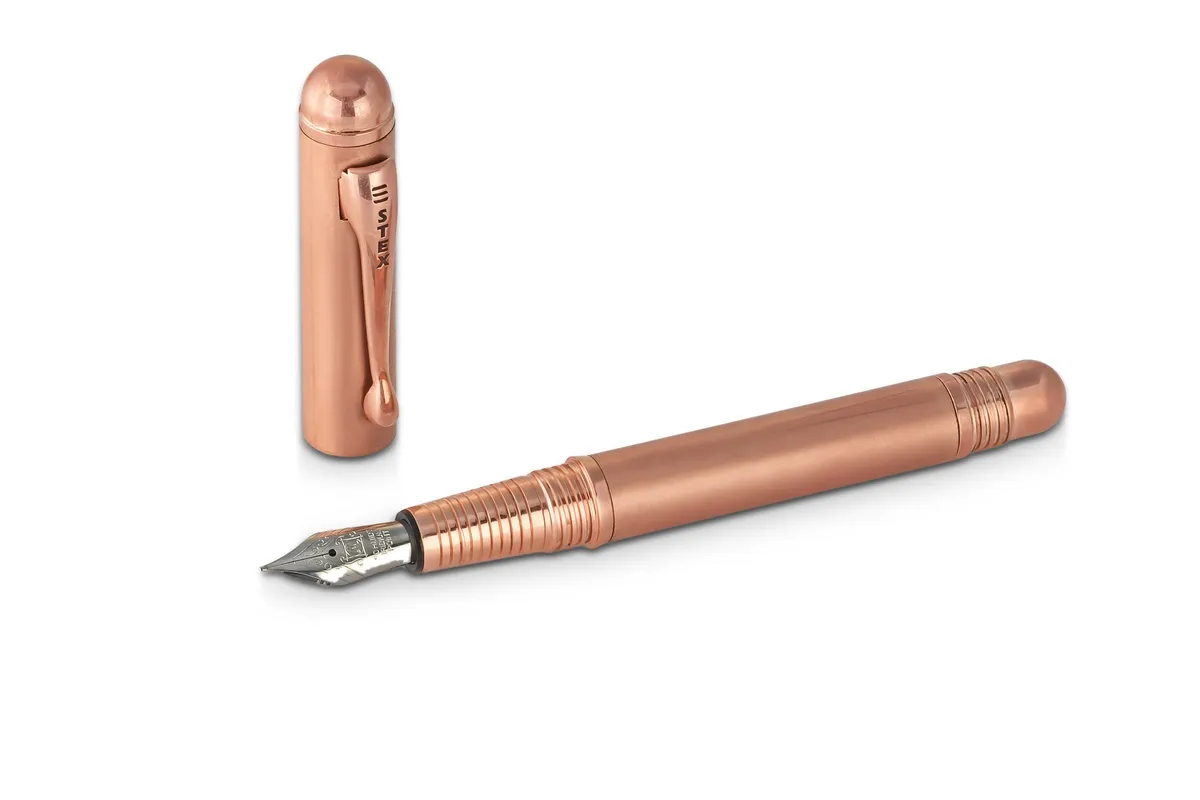
The metal. A solid copper pen is cut from a bar of copper, not stamped from thin sheet or plated over brass or plastic. Copper is soft enough to machine finely and dense enough to give the pen its weight.
The machining. Threads for the cap and section, the fit between parts and the grip pattern are all cut to close tolerances. That is what makes a cap close with a clean, even feel and stay closed.
The finishing. Each STEX pen is finished by hand in our workshop, Made in India. Finishing decides how the surface looks on day one and how evenly it ages.
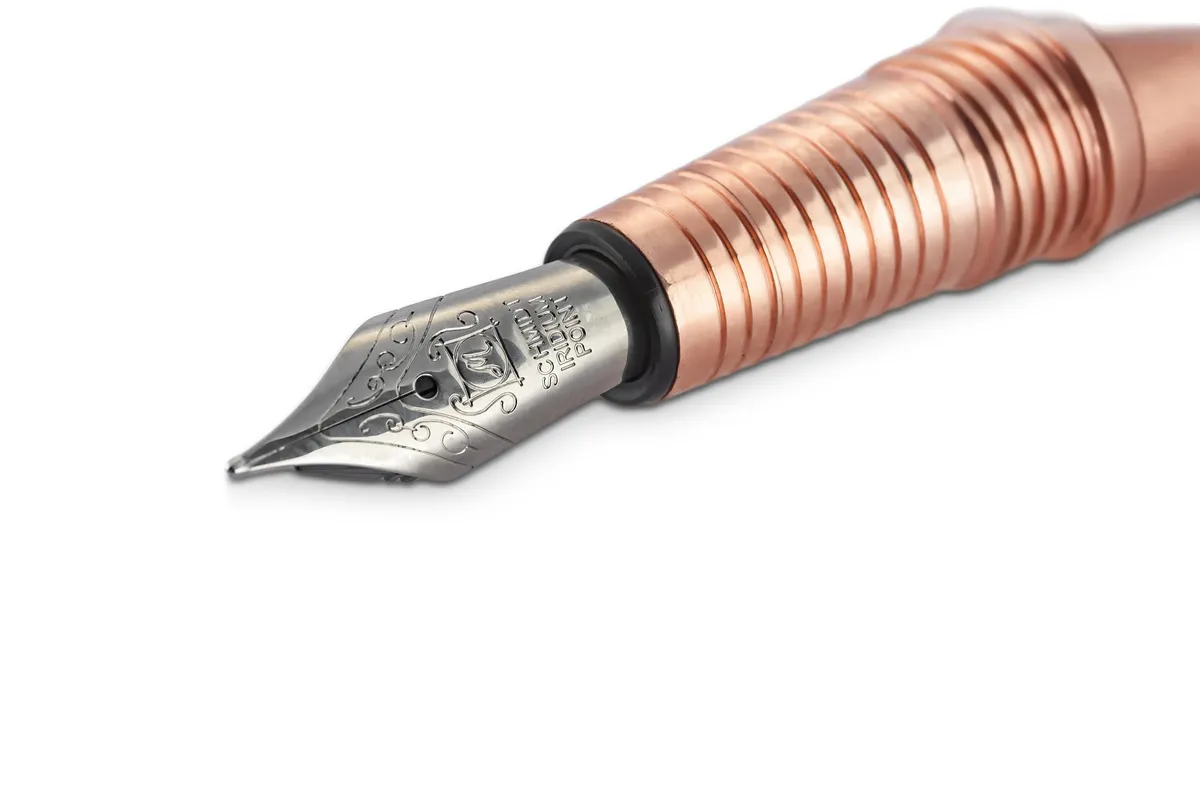
Inside, the writing parts are the same kind used across the fountain pen world: a German Schmidt steel nib and a converter or cartridge. So the question is less "does it write better?" and more "does it feel better to own and use?"
The weight question
Copper is about twice as dense as titanium and three times as dense as aluminium. In practice:
- A full-size copper fountain pen such as the 137C Cu weighs 62 g.
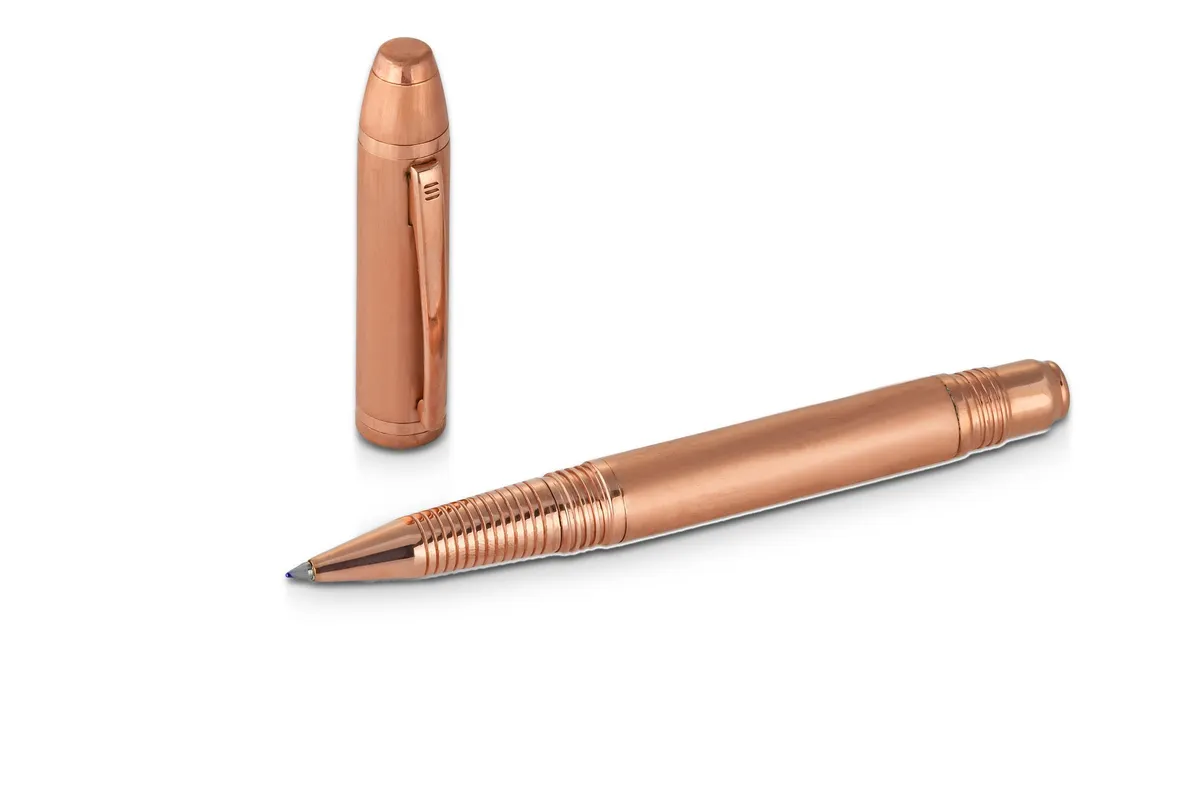
- The copper D’Magno weighs 50 g and the Magneto 51.25 g.
- A pocket-length copper pen, the 100C Cu, weighs 55 g.
- For comparison, many everyday plastic fountain pens weigh 15 g to 30 g.
Worth it if: you write in long sessions, press hard with light pens, or want a pen that feels deliberate. A heavier pen rests on the paper, so many people relax their grip and their writing steadies.
Not worth it if: you want something you forget is in your pocket, or you write very fast in short bursts. A titanium or slim pen will suit you better. Our guide to pen weight and balance helps you find your range.
The feel
Copper has a feel no plating can copy. It is cool when you first pick it up and warms to your hand within a minute. Bare copper also has a faint grip to it compared with polished lacquer, so it is less likely to slide in the fingers. Grip patterns add to that: the D’Magno has fine square threads cut into its section to hold your fingers in place.
The ageing
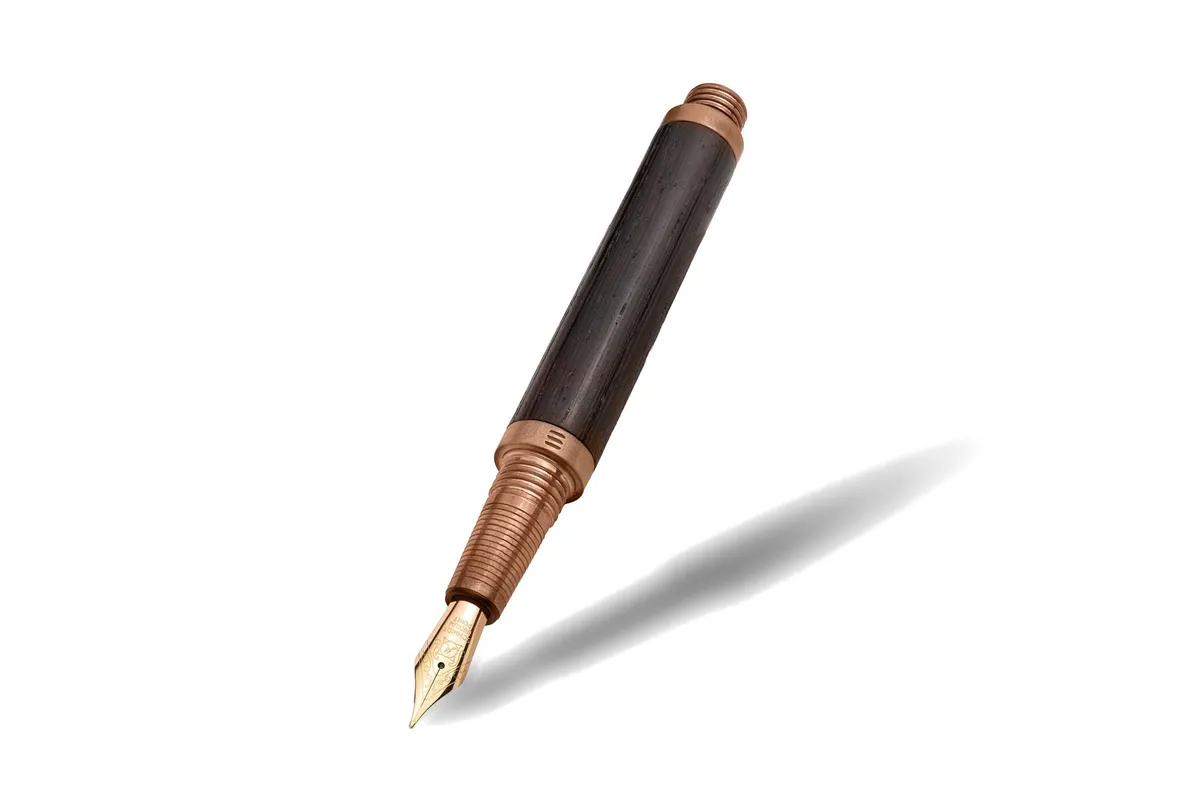
This is the part that divides people. Bare copper darkens with air and with the oils from your hands, moving from bright pink to amber to a deep brown over months. The areas you hold most age differently from the rest, so the pen becomes a record of how you use it. That process is explained in why copper pens darken.
Worth it if: you like objects that wear in, like leather, raw denim or a cast-iron pan. A copper pen given as a gift, in particular, keeps changing for years after the day it was given.
Not worth it if: you want the pen to look exactly the same in five years. Choose titanium, which never tarnishes, or a black PVD finish such as the Magneto PVD Black.
You aren't locked in, though. A copper pen can be polished back to bright in a few minutes with lemon and salt or a copper polish (here's how).
The care
Less than people expect. The ink never touches the copper, so any fountain pen ink is safe. Inside, it needs the same occasional water flush as any fountain pen. Outside, wipe it with a dry cloth if your hands are damp, and store it capped. That's all.
How long it lasts
A machined copper body has no plating to wear through and no plastic to crack. With a nib and converter that can be replaced if ever needed, a well-made metal pen can last for decades. That changes the arithmetic: a pen used every day for twenty years costs very little per year.
Copper pen: worth it or not?
| You'll likely love copper if | You'll likely prefer something else if |
|---|---|
| You write by hand most days | You rarely write by hand |
| You like a pen with weight | You want the lightest pen possible |
| You enjoy a finish that changes | You want a finish that never changes |
| You want a pen to keep for decades | You tend to lose pens |
| You're choosing a meaningful gift | You need a quick, inexpensive gift |
Where to start
If you're unsure about weight, try a mid-weight copper pen like the D’Magno or Magneto (around 50 g). If you want the full copper experience, the 137C Cu is the heaviest pen in the range. If you'd like warmth with less weight, a copper-and-titanium pen such as the 100C CuTi weighs just 32 g.
For the full background on materials, shapes and care, read our complete guide to copper fountain pens, or browse the fountain pen collection.
Questions people ask
Are copper pens worth the money?
They are for people who write by hand regularly and want a pen to keep. You pay for solid machined metal, hand finishing and a surface that ages with use. Because a metal pen can last decades, the cost per year of daily use is low.
Do copper pens tarnish?
Yes, and that is part of their character. Copper darkens to amber and brown with air and hand contact. The patina is a thin surface layer that doesn't affect writing, and it can be polished off at any time with lemon and salt or a copper polish.
Is a copper pen too heavy for daily writing?
Not for most people. Many find that a heavier pen means a lighter grip and steadier writing. If you write very fast or prefer light pens, choose a slimmer copper model or a copper-and-titanium pen, which weighs much less.
Does copper affect the ink or the nib?
No. The ink stays in the converter or cartridge, feed and steel nib and never touches the copper body, so any fountain pen ink is safe to use.