Two pens of the same length can feel completely different in the hand. One settles into your fingers and almost writes by itself; the other darts across the page. The difference is weight and balance, and once you know what you like, choosing a pen becomes easy.
How heavy is a fountain pen?
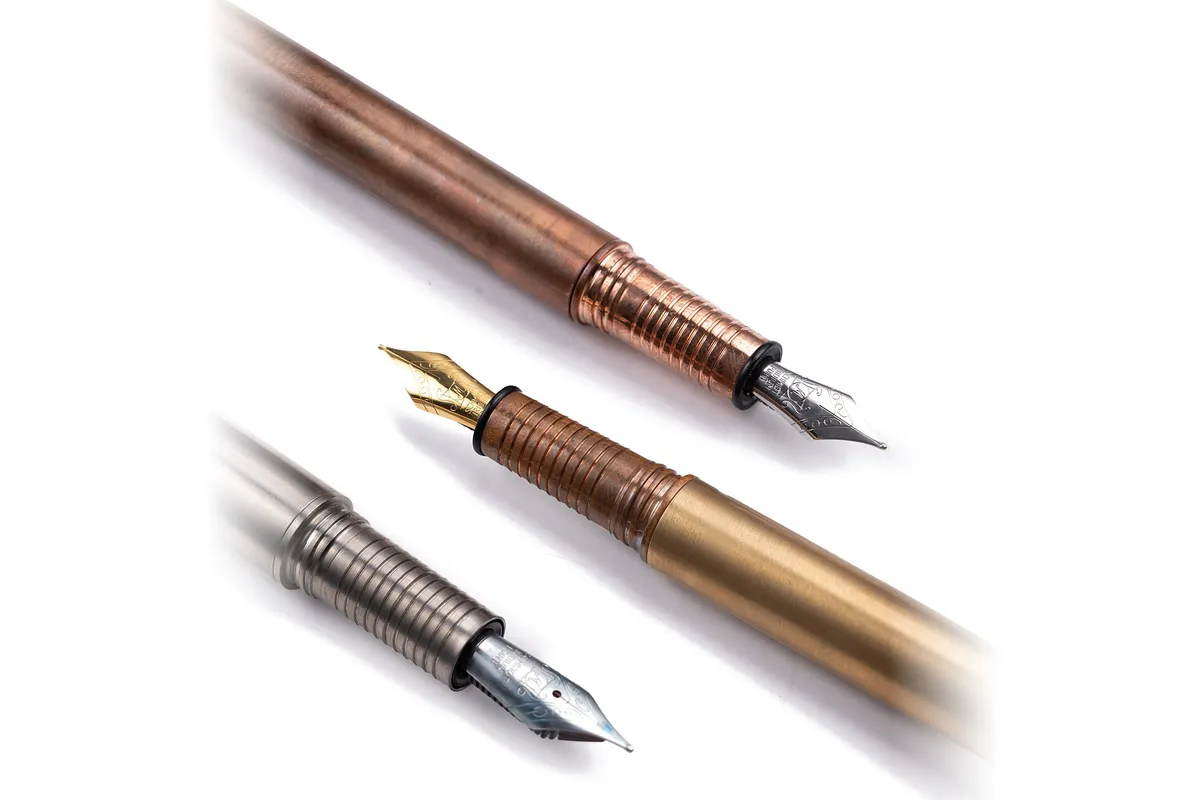
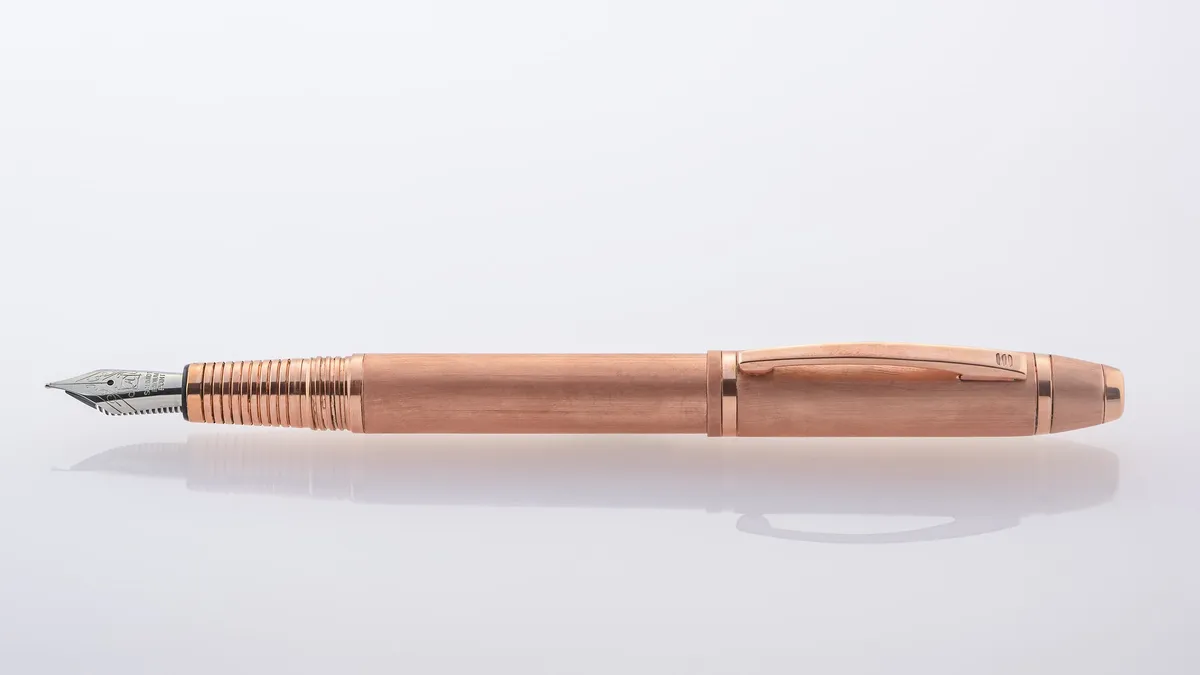
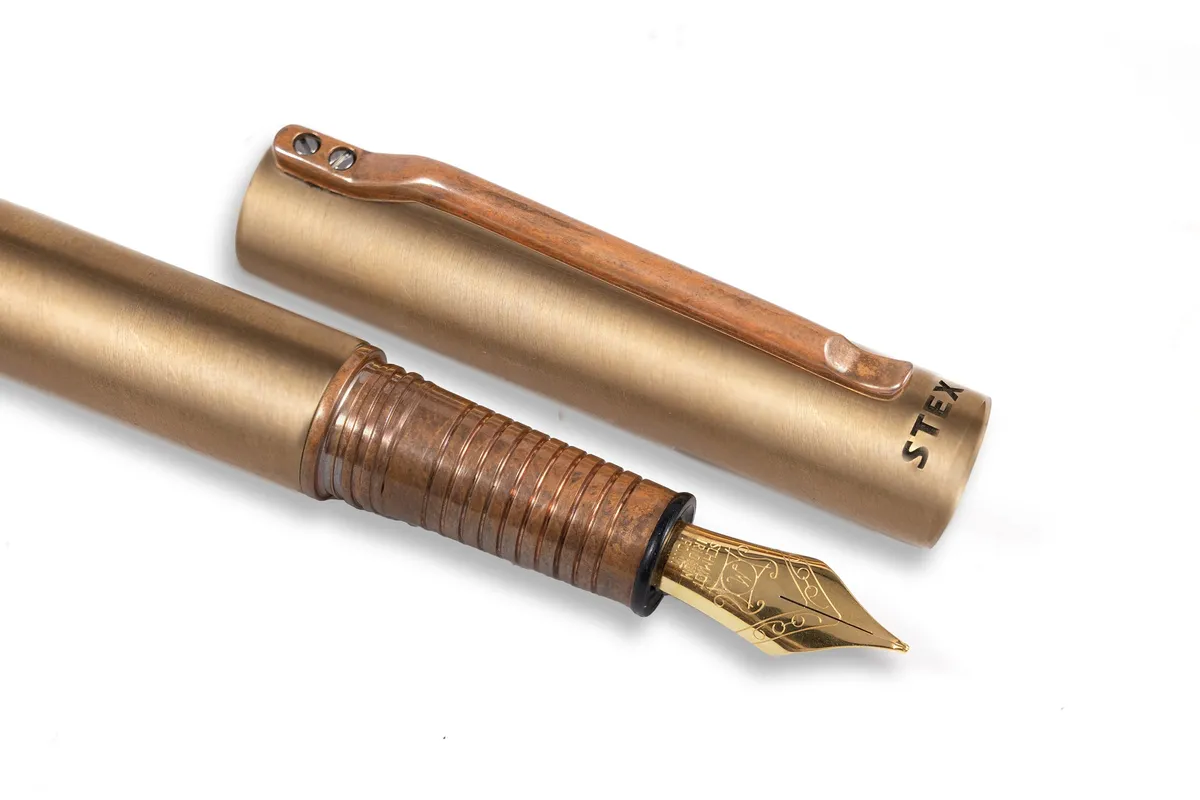
Plastic and resin fountain pens often weigh 10 to 25 g. Metal pens are heavier. STEX pens, made from copper, brass and titanium, range from about 24 g to 62 g. A few examples from the range:
| Pen | Length capped | Weight |
|---|---|---|
| Magnum R roller | 136.4 mm | 24.1 g |
| D'magno | 140 mm | 50 g |
| Magneto | 140 mm | 51.25 g |
| 137C | 137 mm | 62 g |
The weight finder on our home page places every STEX pen on a scale; drag it to the weight you like and the closest pens step forward.
Heavy pens: steady and deliberate
A heavier pen does some of the work for you. Its weight carries the nib across the page, so you can relax your grip and let it glide. Many people find heavy pens:
- Calmer and neater for slow, careful writing: letters, journals, signatures
- More stable, with less wobble on downstrokes
- More satisfying to hold, with a sense of quality you can feel
The trade-off is fatigue over very long sessions, especially for people who grip tightly.
Light pens: quick and tireless
A lighter pen moves with less effort and is easier to control at speed. Light pens suit:
- Long note-taking in lectures and meetings
- Fast writers and people with small handwriting
- Anyone with hand or wrist fatigue
Titanium is the obvious choice if you want a metal pen that stays light: it is about half the density of copper. See copper, brass or titanium for a full comparison.
Balance: where the weight sits
Total weight is only half the story. Balance is where the pen's weight is centred along its length.
- Front-weighted pens (weight near the nib) feel controlled and precise.
- Centre-balanced pens feel neutral and suit most hands.
- Back-weighted pens feel like they want to tip backwards and can tire the hand.
Posting the cap (fitting it onto the end of the barrel while you write) moves the balance backwards and makes the pen longer. On a short pocket pen like the 100C, posting turns a 100 mm pen into a full-size writing length of about 140 mm. On a long, heavy pen, many people prefer to write unposted. Each STEX product page draws the pen to scale, capped and posted, beside a bank card so you can see the difference.
Grip diameter
Thicker grips spread the pressure across your fingers and suit larger hands and people who grip tightly. Thinner grips suit smaller hands and fast writing. Most STEX pens sit between about 11 mm and 13 mm across, with the acrylic and rosewood models wider at 16 mm.
How to find your weight
- Weigh the pen you write with most often today, on a kitchen scale.
- Ask whether you'd like it to feel steadier (go heavier) or quicker (go lighter).
- Consider what you write: letters and journals suit weight; long notes suit lightness.
- If you're torn, choose the middle of the range, around 35 to 45 g.
Questions people ask
What is a good weight for a fountain pen?
Most people are comfortable between 20 g and 45 g. Choose heavier for slow, deliberate writing and lighter for long note-taking or if your hand tires easily.
Should I post the cap when writing?
Post the cap if the pen feels too short or too front-heavy; write unposted if posting makes it feel long or tip backwards. Short pocket pens are usually designed to be posted.
Are heavy pens bad for your hand?
Not necessarily. A heavy pen lets you grip more lightly, which many people find more comfortable. If you write for hours at a time, a lighter titanium pen may tire you less.