If you've browsed the STEX range, you'll have seen names like 137C CuBr or 100C CuTi. They aren't random. The letters are chemistry: each one tells you which metals the pen is made from.
The codes
| Code | Metals | Look | Ageing |
|---|---|---|---|
| Cu | Copper | Rosy salmon-pink | Darkens to warm brown |
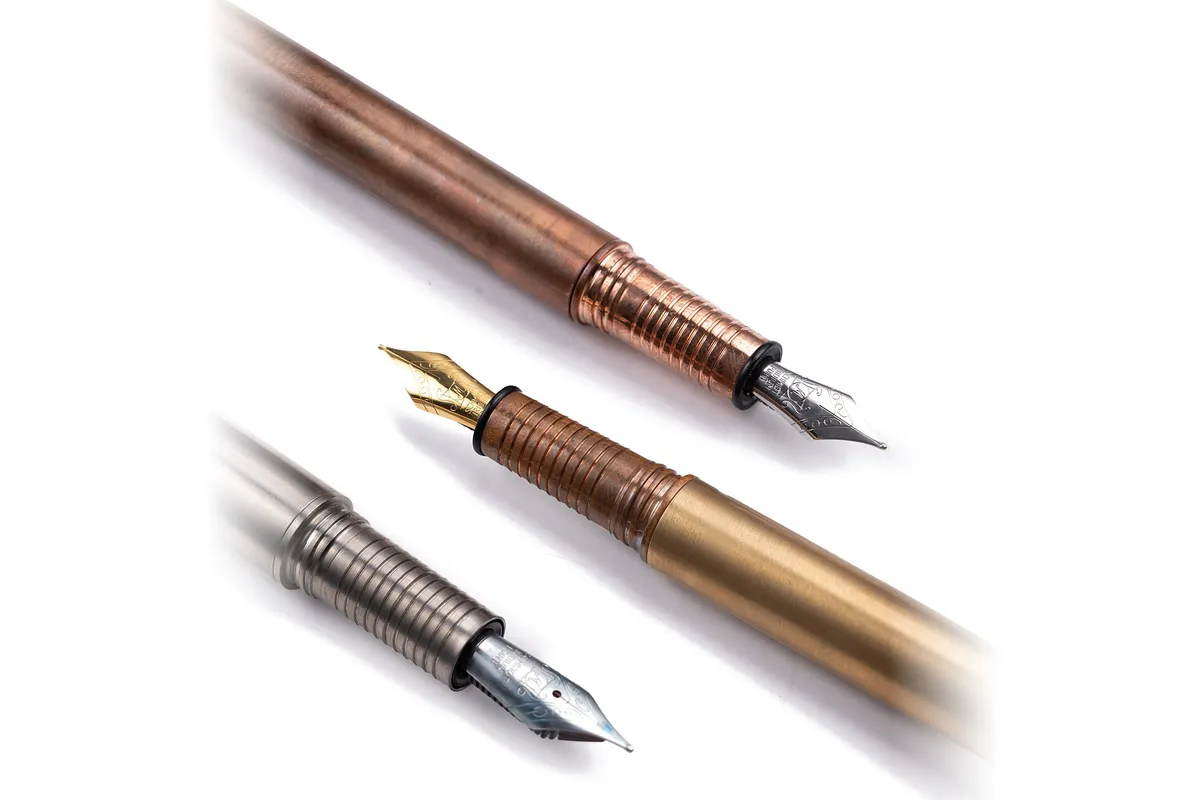
| CuBr | Copper and brass | Rose and gold together | Copper darkens faster than brass, so contrast grows |
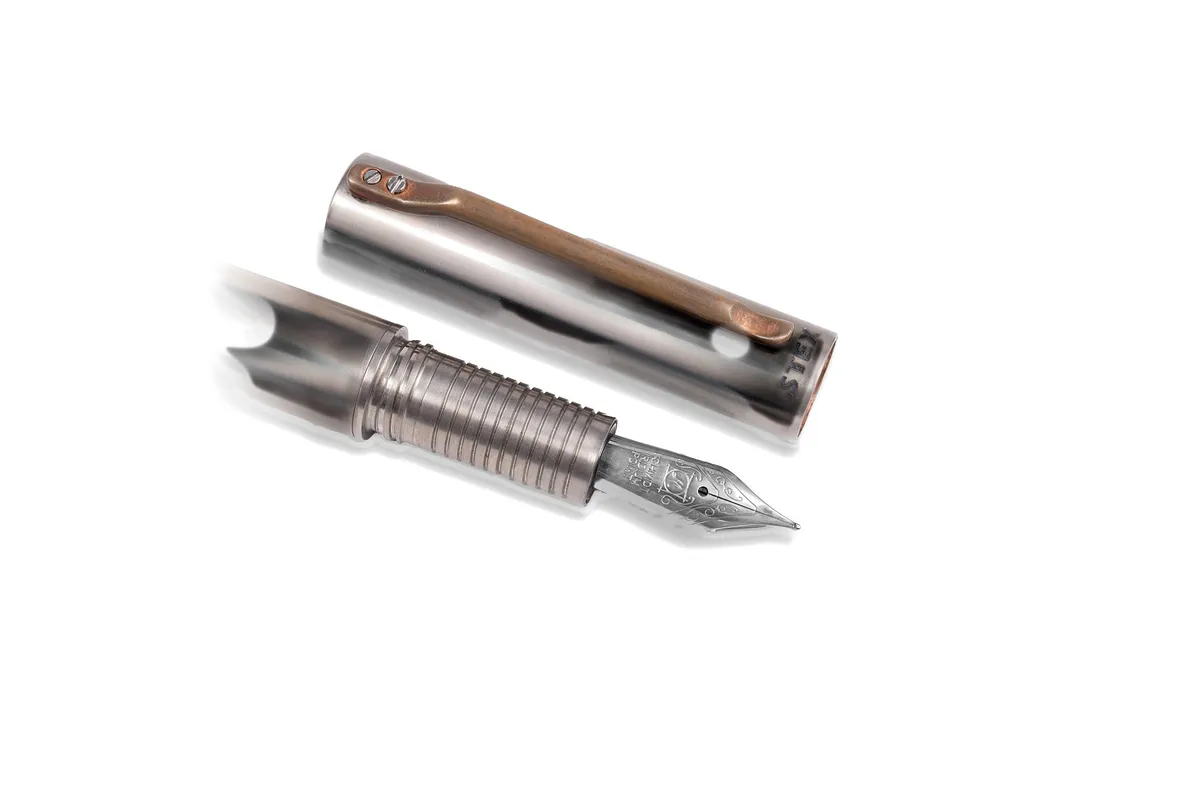
| CuTi | Copper and titanium | Grey titanium with copper accents | Titanium stays bright; copper accents darken |
| CuSS | Copper and stainless steel | Bright steel with a copper grip | Steel stays bright; copper grip darkens |
| Ti | Titanium | Grey-silver | Stays the same |
Cu is the chemical symbol for copper and Ti for titanium. Br stands for brass and SS for stainless steel.
The model numbers
The numbers match the pen's capped length in millimetres:
- 100C: the pocket pen, 100 mm capped and 140 mm with the cap posted. See pocket fountain pens.
- 137C: the full-size pen, 137 mm capped.
The 137C family
All 137C pens share the same profile, so you can compare the metals directly:
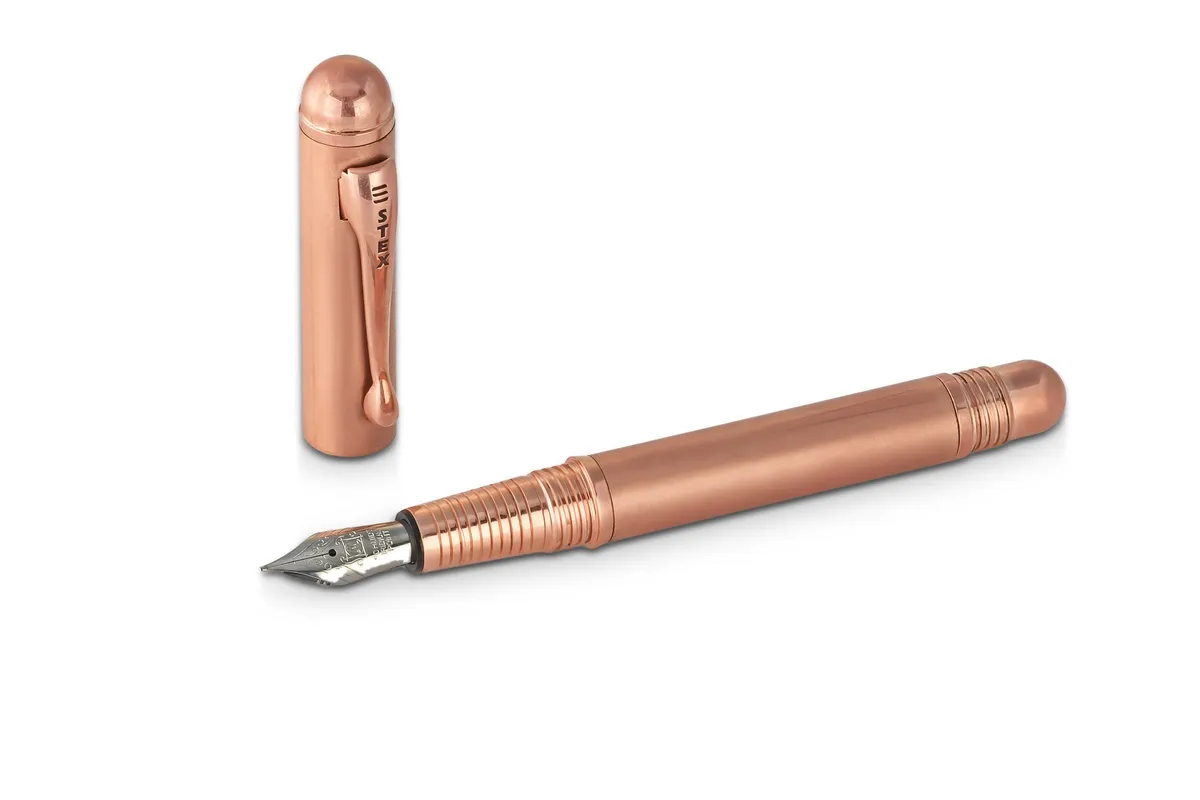
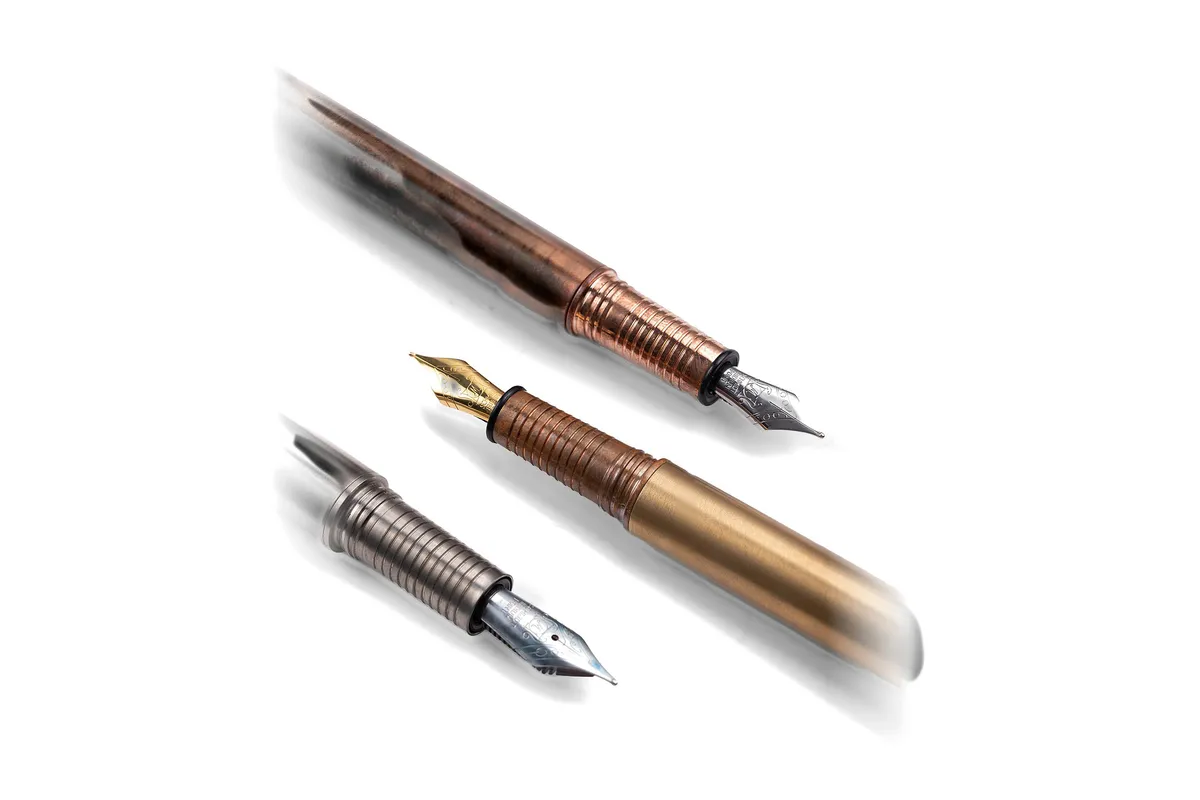
- 137C Cu: pure copper, machined to the 137C profile. 62 g, the heaviest. It darkens and patinates with handling, so no two age alike.
- 137C CuBr: copper and brass. 54 g, balanced for long sessions, with two warm tones.
- 137C Ti: copper, brass and titanium in one body. 42 g, the lightest of the three, and 13 mm across.
- CuSS: a stainless-steel cap and barrel with a copper grip section. Bright, hard-wearing and balanced in the hand.
The weight difference comes down to the metals: copper is the densest, titanium the lightest. See pen weight and balance.
The 100C family
The same idea in a pocket size:
- 100C Cu: premium-grade copper that patinates beautifully. 55 g with the cap, 33 g without.
- 100C CuBr: copper and brass in the compact body, with a warm metallic finish.
- 100C CuTi: a titanium cap and barrel with a copper section, clip and posting button.
- 100C Titanium: made entirely from titanium. 34 g, light and hard to wear out.
Which should you choose?
- Choose Cu for the most weight and the most dramatic patina. See why copper pens darken.
- Choose CuBr for warmth with a golden contrast that deepens as it ages. See brass vs copper pens.
- Choose CuTi or CuSS for a bright, modern pen with just a touch of copper where you hold it.
- Choose Ti for the lightest, toughest pen that never changes. See titanium fountain pens.
Every one is machined in our workshop in India, finished by hand and fitted with a Schmidt nib (medium as standard; fine and bold available) and a converter, and takes standard international cartridges.
Questions people ask
What does Cu mean on a STEX pen?
Cu is the chemical symbol for copper. A pen marked Cu is made from copper.
What is CuBr?
Copper and brass. A CuBr pen combines both metals, so it shows rose and gold tones that age at different speeds.
What is the difference between the 100C and 137C?
The 100C is a pocket pen, 100 mm capped and 140 mm posted. The 137C is a full-size pen, 137 mm capped.
Which STEX metal is lightest?
Titanium. The 100C Titanium weighs 34 g, and the 137C Ti is the lightest pen in the 137C family at 42 g.