For much of the twentieth century, a fountain pen was the everyday writing tool of Indian students, clerks, writers and leaders, and the country built a craft around making them. That craft is still alive. Today, Indian-made pens are sought by collectors around the world, and new makers are adding fresh materials and methods to an old tradition.
A tradition of hand-turned pens
India's best-known pen-making tradition is hand-turning. In small family workshops, especially in the south of the country, craftsmen turn pens on lathes from rods of ebonite, a hard rubber that is warm to hold and easy to repair. Rajahmundry in Andhra Pradesh is often named as a historic centre, home to Ratnam Pen Works, which has made pens there since the 1930s. Many of these workshops still make each pen by hand, one at a time.
Hand-turned ebonite pens are known for:
- Large ink capacity, often filled with an eyedropper directly into the barrel
- Generous sizes and comfortable grips
- Repairability, with simple parts that can be replaced for decades
Machined metal: a newer strand
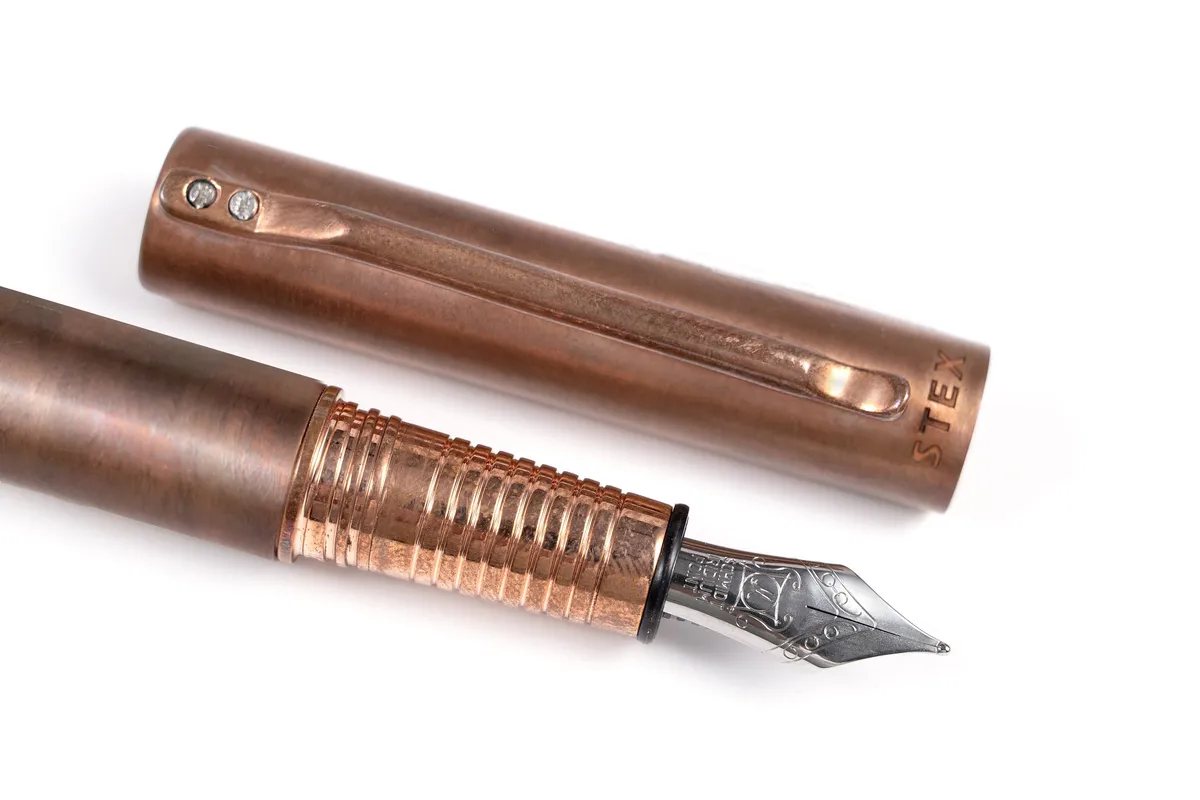
Metal pens ask for different skills: precision machining, threading to fractions of a millimetre, and hand finishing so that a hard surface feels soft in the hand. STEX grew out of that world. Our founders, Nandish and Jigna Shah, spent more than twenty years in the copper trade through their company, Star Exim, before Nandish, testing the limits of a new machine, had the idea for a copper pen.
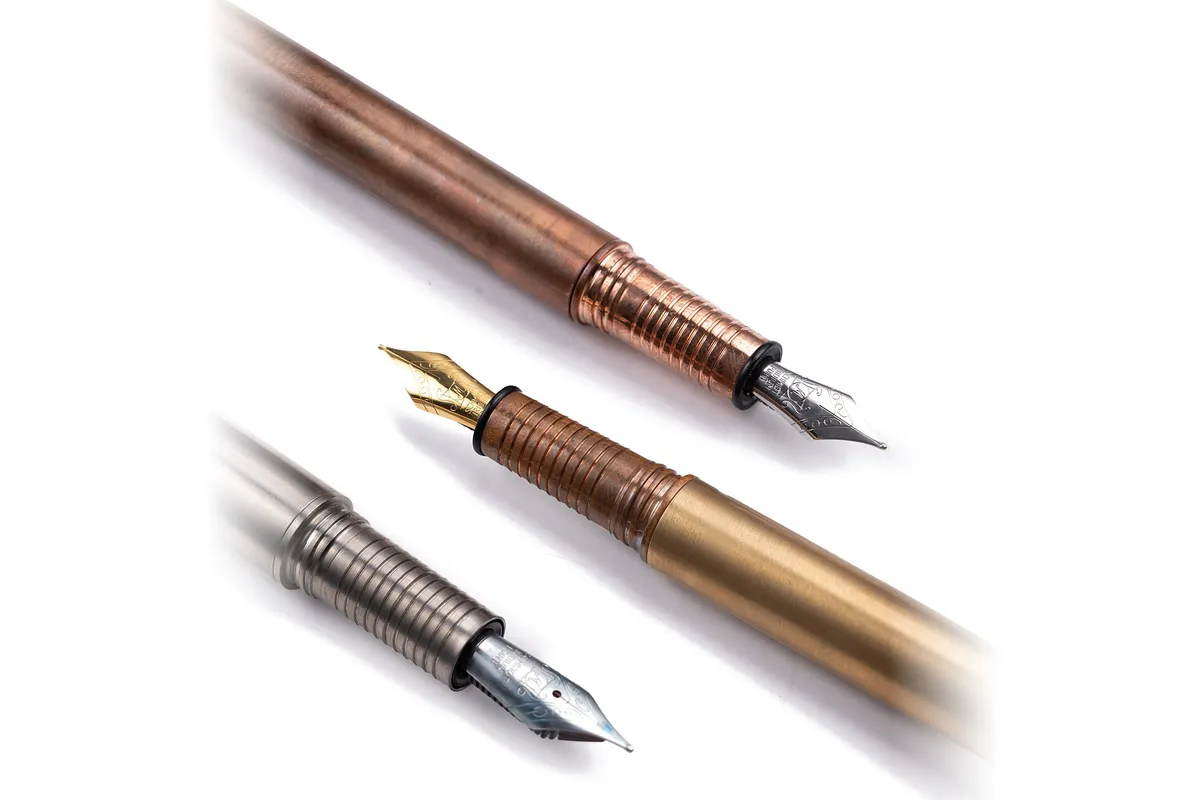
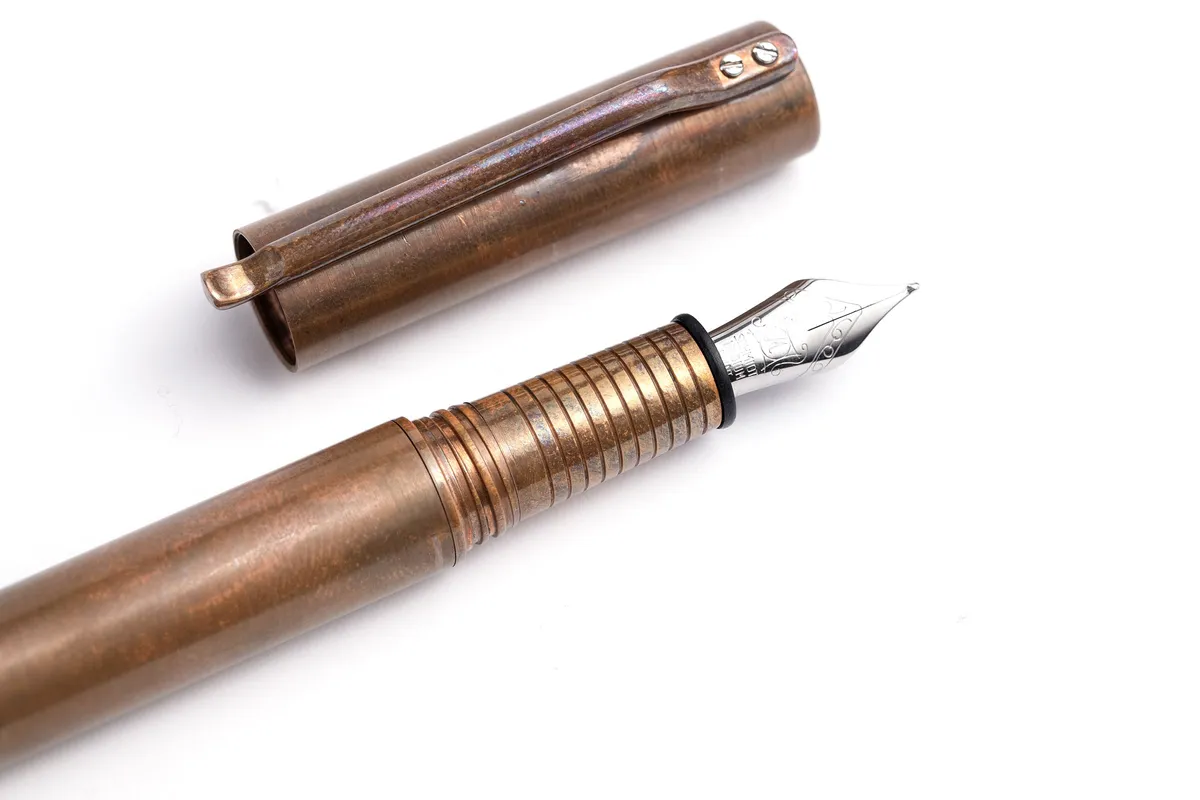
Today every STEX pen is machined from solid copper, brass or titanium at our workshop in India, then finished by hand. Threads are cut so caps close cleanly; on the Magneto, the cap closes on a magnet instead. Each pen is fitted with a Schmidt nib and converter from Germany, combining Indian making with a proven writing unit.
What to look for in an Indian-made pen
Whichever maker you choose, a few things separate a pen that lasts:
- Material you can name. Ebonite, acrylic, copper, brass, titanium: a good maker tells you exactly what the pen is made from.
- A reliable nib. Ask whether the nib is steel or gold, who makes it, and which widths are available. Read what a Schmidt nib is for one benchmark.
- Clean threads and a secure cap. The cap should close firmly and the barrel should screw on without grinding.
- Honest specifications. Length, diameter and weight should be published, so you can compare. Every STEX product page lists them and draws the pen to scale.
- After-sales support. A real person to write to, and a clear exchange policy if something arrives faulty.
Why buy a pen made in India?
- You're buying from the maker. Small workshops sell directly, so more of what you pay goes into materials and craft.
- The making is visible. Many Indian makers, STEX included, are happy to talk about how each pen is made.
- The value is real. Hand-finished metal and ebonite pens from India often cost far less than comparable pens from larger international brands.
Indian pens, worldwide
Indian pens travel well. STEX ships every order free with tracking, anywhere in the world, with prices in rupees for India and US dollars elsewhere. Collectors have met the STEX family at international pen shows, including the DC Pen Show in the United States.
If you're starting your own collection, begin with our beginner's guide, compare copper, brass and titanium, or browse the full STEX collection.
Questions people ask
Are Indian fountain pens good quality?
Many are excellent. India has long-established hand-turned ebonite makers and newer makers of machined metal pens. Look for named materials, a reliable nib, clean threads and published specifications.
Where are STEX pens made?
STEX pens are machined from copper, brass and titanium and finished by hand at the STEX workshop in India and fitted with German Schmidt nibs and converters.
Do Indian pen makers ship internationally?
Many do. STEX ships every order free with tracking worldwide, with prices shown in US dollars outside India.