A fountain pen is the most personal thing you can write with. It responds to your hand, it lays down a line of real ink, and a good one lasts for decades. It also works a little differently from a ballpoint. Here is everything you need to start well.
Why switch to a fountain pen?
- Less effort. Ink flows by capillary action, so the pen writes with almost no pressure. Long writing sessions are kinder to your hand.
- Better-looking writing. Even everyday handwriting gains character from the varying line of a nib and the shading of real ink.
- Endless colour. Fill from any of thousands of bottled inks.
- Less waste. One well-made pen and a bottle of ink replace boxes of disposable pens.
Choosing your first pen
Weight
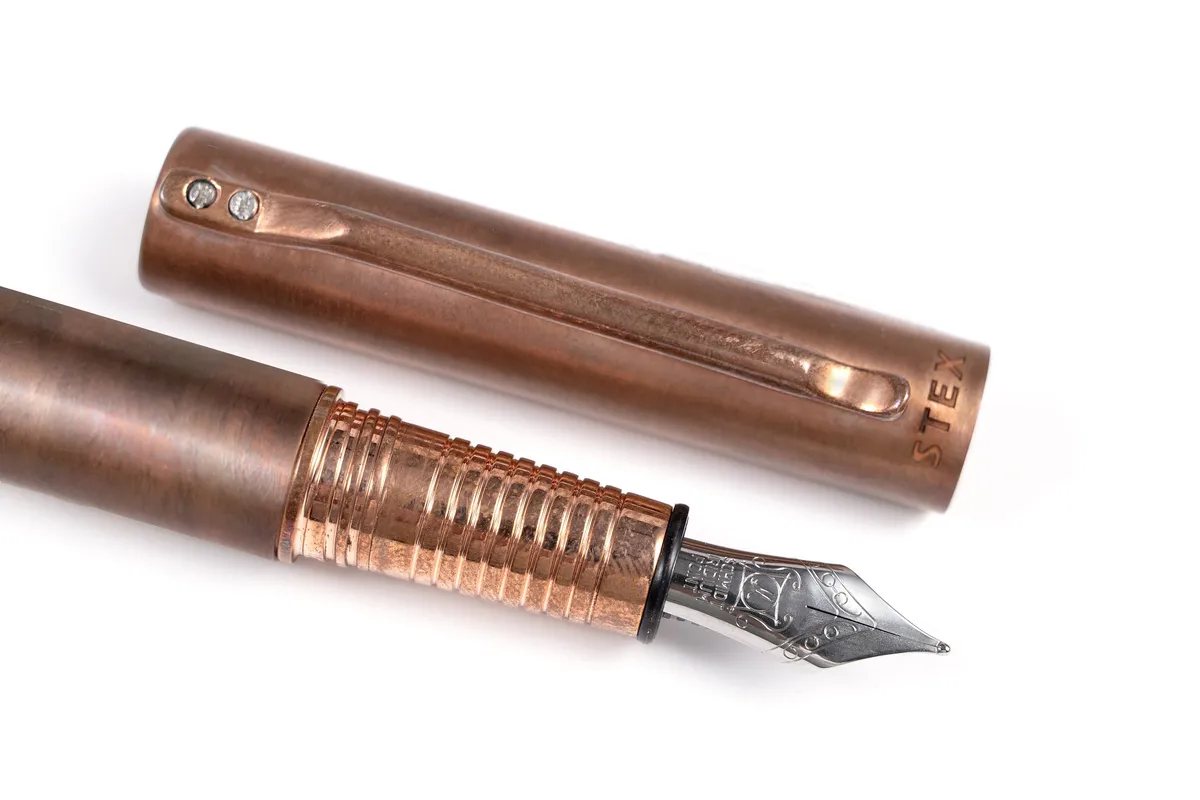
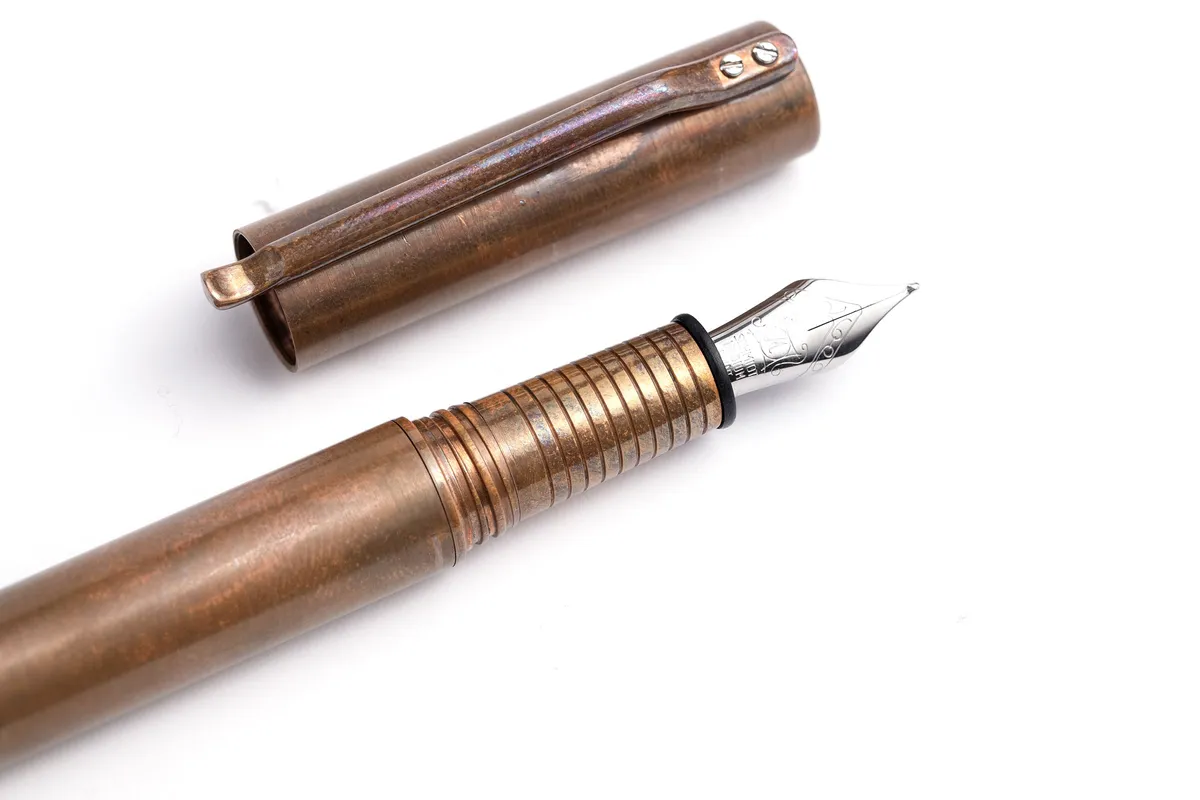
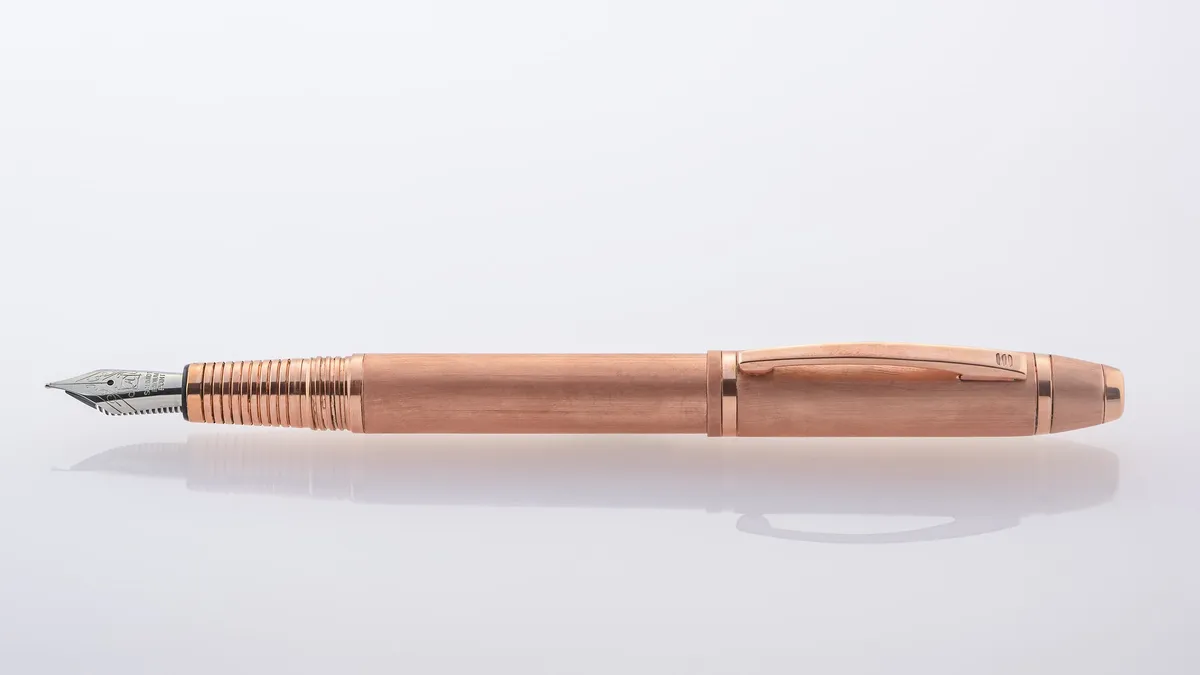
Pick up a pen before you choose a nib. A heavier metal pen, like a copper STEX 137C, rests in the hand and moves steadily, which many beginners find calming. A lighter pen, like the slim Magnum PVD, is quicker over long notes. Our guide to weight and balance explains the difference, and the weight finder on our home page shows every STEX pen from about 24 g to 58 g.
Nib
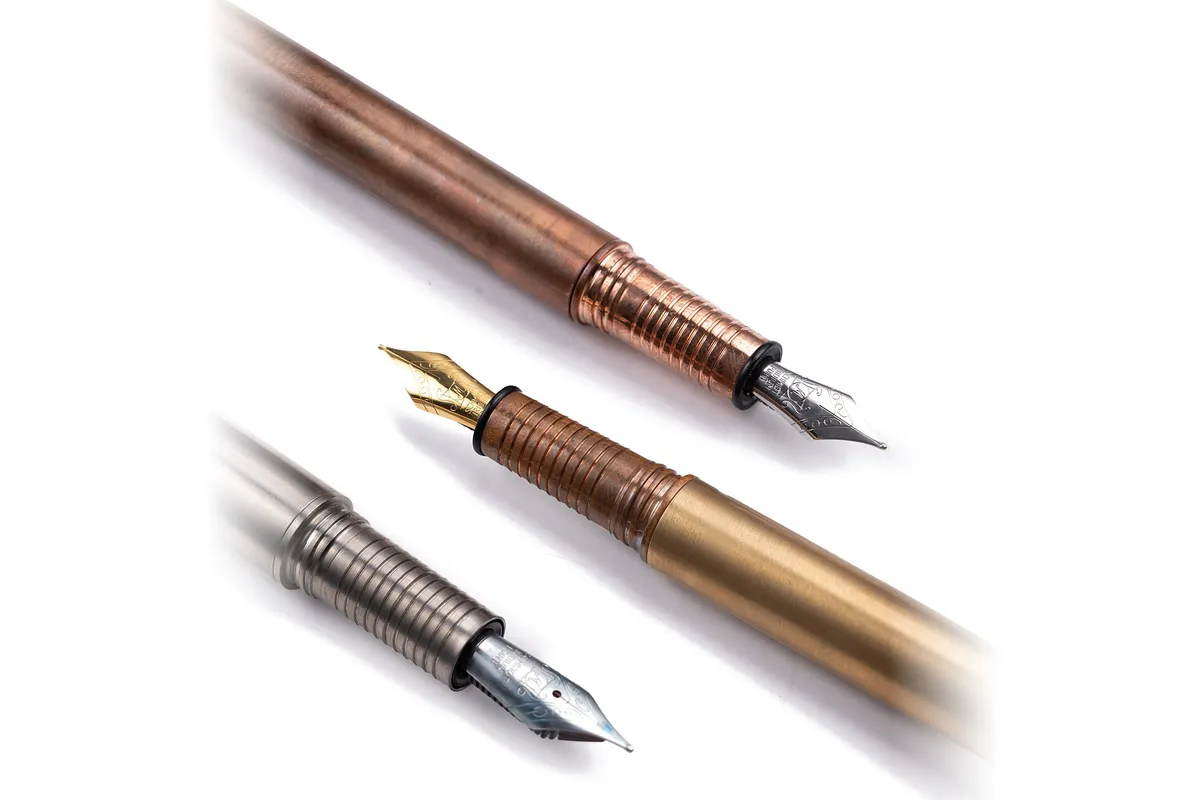
Start with a steel nib in fine or medium. Steel is durable and forgiving; fine suits small handwriting and thin paper, medium suits most people. Every STEX fountain pen uses a German Schmidt steel nib; read what a Schmidt nib is for more.
Filling system
Choose a pen that takes both a converter and standard international cartridges. You can fill from a bottle at home and slip in a cartridge when you travel. All STEX fountain pens do both; here is how to fill a fountain pen.
How to hold and write
- Hold the pen lightly, as you would a paintbrush, further from the nib than you might hold a ballpoint.
- Keep the nib's engraved face up and the slit pointing straight along the line you're writing.
- Write at a lower angle, roughly 40 to 55 degrees to the paper.
- Let the pen glide. If you're pressing, stop. The weight of your hand is enough.
- Move from the arm and shoulder rather than only the fingers. Your writing will feel looser and less tiring.
Paper matters
Fountain pen ink is wetter than ballpoint paste, so cheap, absorbent paper can make lines fuzzy (feathering) or show through the back (bleed-through). Look for:
- Paper of 80 gsm or heavier
- Notebooks described as fountain pen friendly
- A smooth, coated surface for crisp lines
You don't need expensive paper to start; a good notebook makes the first week much more enjoyable.
The five mistakes beginners make
- Pressing too hard. It spreads the nib and makes the line uneven. Relax your grip.
- Leaving the pen uncapped. Ink dries in the feed within minutes. Cap it whenever you pause.
- Using the wrong ink. Only use ink made for fountain pens. Drawing ink and India ink will clog the pen. See choosing fountain pen ink.
- Never cleaning the pen. Flush it with water every few weeks or when you change ink. Our care guide shows how.
- Lending it out. A nib slowly wears to its owner's angle. Lend a ballpoint instead.
What to buy alongside your pen
- A bottle of fountain pen ink in a colour you love (blue or black is a fine start)
- A notebook with fountain-pen-friendly paper
- A soft cloth, especially if your pen is copper and you want to keep it bright
Ready to start?
Browse the STEX fountain pens, each machined by hand in India and fitted with a Schmidt nib and converter. Every pen ships free with tracking, and prices show in rupees in India and US dollars everywhere else. If you have a question before you choose, write to us and a person will reply.
Questions people ask
Is a fountain pen good for everyday writing?
Yes. Fountain pens need less pressure than ballpoints, so they are comfortable for long notes. Choose a fine or medium steel nib and fountain-pen-friendly paper for everyday use.
Are fountain pens hard to maintain?
No. Keep the pen capped, use fountain pen ink and flush it with water every few weeks or when you change ink. That is all most pens need.
Which nib is best for beginners?
A steel nib in medium (M) suits most beginners. Choose fine (F) for small handwriting or thin paper.